Fresh restrictions to control Covid-19 pandemic cripple life in Karachi


 0
0


KARACHI: All commercial and business activities, government and private offices as well as passenger transport services in Karachi remained suspended on Sunday as part of the National Command and Operation Centre’s ‘stay home-stay safe’ restrictions that would remain in place till May 16 to stop further spread of Covid-19 pandemic.
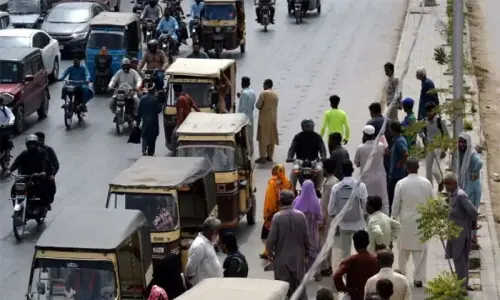
It was the first day of the lockdown in Karachi when all major thoroughfares wore a deserted look during the first half of the day amid hot and humid weather.
Only grocery, meat and vegetable shops, medical stores, bakeries, milk shops, fuel stations were open. Fruit vendors were also allowed to work and so did food outlets, eateries and restaurants which remained open only for home deliveries.
Ports and vaccination centres remained operational on Sunday.
Vendors found playing hide-and-seek with police, LEA personnel
While all shops were previously allowed to open from 5am to 7pm, the home department issued another notification through which it extended the timing for only bakeries and milk shops from 5am to 12noon.
The government has allowed only essential travel by private vehicles with half seating capacity, but a rush of cars and motorcycles on city roads was witnessed after Iftar as people in good numbers were seen heading towards different mosques to pray on the occasion of Shab-i-Qadr (27th Ramazan).
The government has made it clear that everyone needed to follow standard operating procedures (SOPs) that include wearing of face mask. However, the number of people wearing face masks was much a little.
A number of shops were sealed for violating SOPs and in some cases shopkeepers were fined. However, police and local administration were also accused of taking bribes to turn a blind eye to the commercial activities going on in some thickly populated areas.
In some areas, makeshift stalls were set up to sell clothes, jewellery, shoes, etc as part of Eid shopping. Shoes and sandals were being sold on pushcarts in many localities, including Saddar. Vendors stopped their activity wherever they saw police and other law enforcement agencies personnel coming to them but resumed the same as soon as they left.
The government has already imposed a ban on passenger transport vehicles within cities as well as on intercity and interprovincial routes. Therefore, no buses, coasters and other such vehicles were seen plying on roads. There were people who wanted to go to their hometowns to celebrate Eid but found no transport means and had to go to railway stations to catch a train.
In compliance with NCOC directives, the Sindh government has recently introduced a new set of restrictions, banned all passenger transport services ans asked traders to keep markets, malls and shopping centres till May 16.
However, it allowed some essential services to continue their operation while following defined rules. These establishments include hospitals and medical clinic, stand-alone pharmacies, medical centres, vaccination centres, utility services offices, essential municipal services, petrol pumps, e-commerce, home delivery, postal and courier services with properly trained, uniformed and identity carrying delivery persons.
Staffs of welfare organisations, call centres, customer support centres for essential services, technical staff of cellular companies, internet service providers, journalists and other media workers, government essential services, offices and staff and their field operations including port operations, customs, postal and railways have also been allowed movement during the restriction period. There is also no ban on goods transport.
Published in Dawn, May 10th, 2021