0
0


PARIS: Nearly all of the world’s glaciers are losing mass at an ever increasing pace, contributing to more than a fifth of global sea level rise this century, according to unprecedented research released on Wednesday.
Glaciers — vast bodies of frozen water that sit above ground — have been melting fast since the middle of the 20th century, but until now the full extent of ice loss had only been partially understood.
An international team of researchers has for the first time observed all of Earth’s some 220,000 glaciers, excluding the Greenland and Antarctic ice sheets, to properly evaluate the amount and rate of melt over the past two decades.
Analysing images taken by Nasa’s Terra satellite, they found that between 2000-2019, the world’s glaciers lost an average of 267 billion tonnes of ice each year.
That’s enough water to submerge Switzerland under six metres (20 feet) of water — every single year.
But the team also found that the rate of glacier melt had accelerated sharply during the same period.
Between 2000 and 2004, glaciers lost 227 billion tonnes of ice per year. But between 2015-2019, they lost an average of 298 billion tonnes each year.
This glacial melt has contributed to 21 percent of sea level rises in the study period, the researchers said — equivalent to 0.74 millimetres a year.
The study, published in the journal Nature, found that the fastest-melting glaciers were situated in Alaska and the Alps.
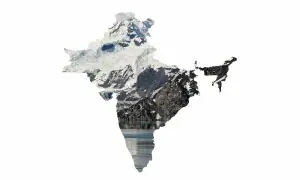
The authors also expressed concern about the retreating mountain glaciers in the Pamir Mountains, the Hindu Kush and the Himalayas, which provide water for more than 1.5 billion people.
Published in Dawn, April 29th, 2021