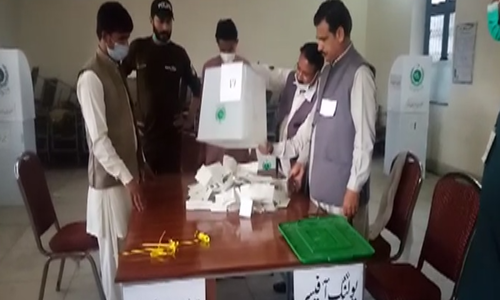
OVER the last two months, Daska has come to denote more than a constituency election. A routine bypoll in February became the focus of national attention when it was marred by violence and then the mysterious disappearance of an entire group of presiding officers late in the foggy night. The sordid saga of Daska, that saw the ECP take unprecedented action against the Punjab administration, and witnessed the Supreme Court upholding the ECP decision for a re-poll in the entire constituency, finally concluded over the weekend with the PML-N candidate beating her PTI rival with a comprehensive margin.
With the eyes of the nation on the NA-75 Daska constituency, and the ECP and local administration leaving nothing to chance, the election happened smoothly and without any untoward incident. The losing candidate made some undignified remarks against the ECP in the aftermath of the result but by and large the PTI government accepted its defeat.
Read: Fafen terms Daska by-poll generally transparent
The original Daska election in February symbolised everything that is wrong with our electoral system. It witnessed the government of the day using state resources to influence the outcome, the local administration using strong-arm tactics to browbeat voters as well as the election staff, the ruling party refusing to admit any wrongdoing in the face of evidence of electoral and administrative skullduggery, and the government stooping to criticise the ECP instead of admitting its own failures. That election showed why we are unable, or perhaps unwilling, to reform the electoral process knowing full well that it requires urgent fixing.
However, the latest re-poll in Daska has shown that we can, in fact, get an election right if all stakeholders are agreed upon it. The PTI government has finally come around to demanding electoral reforms that require a consensus between all major parties. This is an urgent requirement in order to ensure that the next general elections are held in a free and transparent manner. Electoral malpractice generates instability and delegitimises the mandate of the winner, thereby triggering one crisis after another. This root cause must be addressed with all sincerity if we want stability in the system.
It is therefore important that the opposition take the government’s offer seriously, sit across the table in the relevant parliamentary committees, and begin the process of discussing and debating these reforms. With a little more than two years left before the next general elections, there is no time to lose. Empowering the ECP should be a foundational element of this reform package. We have seen in the Daska election what a difference the ECP can make when it is ready and willing to exercise its powers. Meanwhile, the PML-N has shown that it retains its popularity in central Punjab despite facing the rigours of being in the opposition. The PTI has work to do in Punjab.
Published in Dawn, April 13th, 2021