WB report highlights risks posed by Covid to Pakistan’s economy

ISLAMABAD: A new World Bank report released on Wednesday termed new waves of infection, emergence of vaccine-resistant strains coupled with setbacks in mass vaccinations as major risks to the economic outlook of Pakistan.
The ‘South Asia Economic Focus: South Asia Vaccinates, Spring 2021’ warned that more delays in the implementation of critical structural reforms could lead to further fiscal and macroeconomic imbalances.
Output growth is expected to recover gradually over the medium-term, averaging 2.2 per cent over fiscal years 2021-2023, mostly due to contributions from private consumption, the report said.
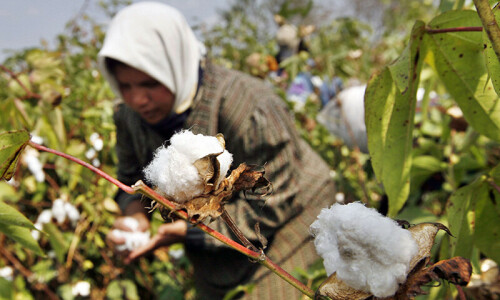
However, sectors that employ the poorest, such as agriculture, are expected to remain weak, and therefore poverty is likely to remain high. The baseline outlook is predicated on the absence of significant infection flare-ups that would require more extensive lockdowns, cautions the World Bank in its twice-a-year regional update.
As critical revenue-enhancing reforms gain pace and expenditure rationalisation efforts resume, the fiscal deficit is projected to gradually narrow over the medium-term, the report says while warning that still, public debt will remain elevated in the medium term, as will Pakistan’s exposure to debt-related shocks.
Though fiscal consolidation efforts are expected to resume, the deficit is projected to remain elevated at 8.3pc of GDP in fiscal year 2021, partly due to the settlement of arrears in the power sector, the report underlines.
It goes on to add the containment measures adopted in response to the Covid-19 led to a collapse in economic activity during the final quarter of fiscal year 2020, and as a result, GDP is estimated to have contracted by 1.5pc in fiscal year 2020.
Half of the working population saw either job or income losses, with informal and low-skilled workers employed in elementary occupations are facing the strong contraction in employment. As a result, poverty incidence is estimated to have increased in fiscal year 2020 from 4.4pc to 5.4pc, using the international poverty line of $1.90 PPP 2011 per day, with more than two million people falling below this poverty line.
Moreover, 40pc of households suffered from moderate to severe food insecurity. The government therefore, focused on mitigating the adverse socioeconomic effects of the pandemic, and the IMF programme was temporarily put on hold, the report adds.
Over the first half of fiscal year 2020-21, there have been signs of a fragile recovery. With increased community mobility, private consumption has strengthened, aided by record official remittance inflows. Investment is also estimated to have slightly recovered, as machinery imports and cement sales both recorded double-digit growth rates.
Published in Dawn, April 1st, 2021