Pakistan gives another extension to helicopter deal with Turkey

WASHINGTON: Pakistan has given another extension to a helicopter deal with Turkey, giving Ankara six more months to deliver the aircraft, a US defence publication reported this week.
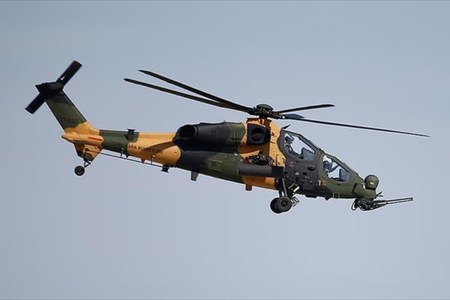
In July 2018, Pakistan signed a $1.5 billion deal with Turkey for buying 30 Turkish-made T129 Atak helicopters. The delivery date, however, has been pushed back due to the Pentagon’s refusal to issue export licenses for engines and other parts made in the US.
“We have obtained a six-month extension from Pakistan,” Turkey’s top procurement official, Ismail Demir, told a US defence publication, Defense News.
In January 2020, Pakistan gave the first, one-year, extension to the manufacturers, the Turkish Aerospace Industries (TAI), for delivering the helicopters, but with the sale in jeopardy, the Turkish government tasked Tusas Engine Industries, TAI’s sister company, with developing an indigenous engine for the T129.
The Defense News publication, which includes television, newspaper and a Website, reported that the US objection was rooted in Washington’s opposition to Ankara purchasing the Russian-made S-400 Triumf air defence system. A senior procurement official in Turkey told Defense News that the extension did not imply the deal would work out.
“This is not a technological or commercial issue,” he said. “It is purely political, and as long as the reasons for the US blockade remain in effect ... what looks like a Turkish-Pakistani deal will be a victim of a Turkish-US dispute.”
Pakistan chose Turkey’s T192 attack helicopters to replace its fleet of AH?1F Cobra gunships that were acquired in the 1980s.
But the Turkish Aerospace Industries, which makes the helicopters, must first secure US export licenses before delivery can take place.
The 5-ton T129 is a twin-engine multirole attack helicopter produced under license from the Italian-British company Agusta Westland and based on the A129 Mangusta. It’s powered by two LHTEC T800-4A turboshaft engines. LHTEC, the maker of the engine, is a joint venture between the American firm Honeywell and the British company Rolls-Royce.
A Turkish aerospace official told Defense News that this was not the only hiccup.
“There are other components the Americans can refuse to issue export licenses for,” he said. “We have the impression that the T129 deal would not go through without a political go-ahead from Washington.”
US lawmakers have recently frozen all major US arms sales to the Nato ally to pressure Ankara to abandon its Russian-built S-400.
The Biden administration has also pulled back requests to Congress to approve sales to Turkey’s defence procurement agency, the Presidency of Defence Industries, on which the US imposed sanctions in December 2020 in response to the S-400 purchase.
Defense News reported that US lawmakers were also concerned that the engines for the attack helicopters could add to Pakistan’s ground attack capability against India, with which the US has been deepening defense and security relationships.
The report noted that before the T129 was chosen, China sent three of its CAIC Z-10 helicopter gunships for trials in Pakistan, but they failed to sufficiently impress officials and were returned.
A former Australian defence attaché to Islamabad Brian Cloughley told Defense News Pakistan’s military too was cautious about using American equipment.
“There is wariness in the Pakistan military concerning equipment of US origin or with US-supplied components,” he said, “simply because if the operator engages in hostilities with a more decided ally of the US, then delivery of these items could be affected.”
“In the case of Pakistan, it is unlikely that Washington would be prepared to provide such equipment should there be conflict with India,” he added. “The solution for Pakistan seems to lie, yet again, in China. It is likely that the Pakistan Army will evaluate the Chinese Z-10ME attack helicopter.”
Published in Dawn, March 17th, 2021