Eye on China, Biden holds first summit with Japan, India, Australia


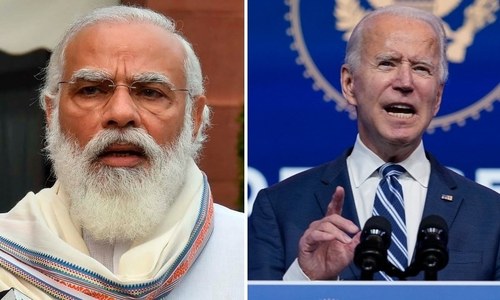
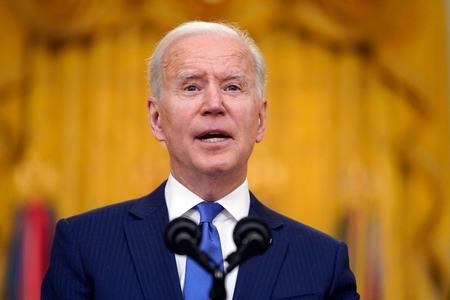
US President Joe Biden on Friday holds the first-ever four-way summit with the leaders of Australia, India and Japan, ramping up efforts to cement alliances as concerns grow over a rising China.
In a flurry of diplomacy, Japan announced that Prime Minister Yoshihide Suga would become the first foreign leader to see Biden in person, a sign of the primacy the new US leader attaches to allies.
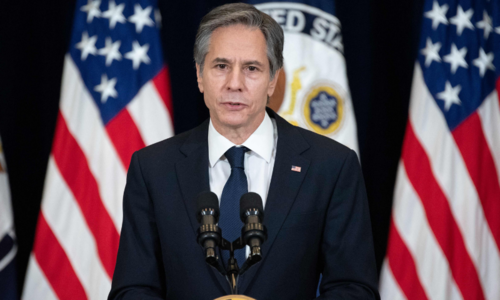
Secretary of State Antony Blinken and Defence Secretary Lloyd Austin are also paying a joint visit next week to both Japan and South Korea on their first foreign travel, with Austin continuing on to India.
Blinken and the US national security advisor, Jake Sullivan, will then meet later next week in Alaska with top Chinese officials in what the Biden administration has promised to be a blunt airing of US concerns.
Friday's four-way summit, while virtual, will mark the first time that leaders of the United States, Japan, India and Australia have met together following more than a decade of meetings at lower levels of the so-called “Quad”.
The summit comes at a time when all four democracies see relations deteriorate with China, which in the past year has engaged in a deadly clash with Indian forces in the Himalayas, has stepped up activity near islands administered by Japan and has imposed sanctions on Australian products following a series of disputes.
The Biden administration, however, has been careful not to link the Quad explicitly to China — a shift in rhetoric after former president Donald Trump's strident denunciations of Beijing.
State Department spokesman Ned Price said that the Quad is not focused “on any single issue, to include China”.
“We have shared interests in standing up for universal values and rights. We have shared economic interests. We have shared security interests. We have deep people-to-people ties with all of these countries,” Price said.
“That's what the Quad is about.”
'Unparalleled' US asset
The Biden administration has nonetheless said that the bolstering of alliances — many of which, particularly in Europe, were badly rattled by the vitriolic Trump — will be key in achieving its goals.
In strategic guidance released earlier this month, the White House cast China as the top challenger and said the United States can help counter Beijing's “aggression” by “bolstering and defending our unparalleled network of allies and partners”.
Blinken has said he will press concerns with Chinese officials on trade and human rights including sweeping new curbs on Hong Kong's elections and the mass incarceration of Uighurs and other mostly Muslim minorities, a policy that both Biden and Trump have described as genocide.
China's state-run Global Times newspaper criticised the Quad summit as a US plot against Beijing, saying in an opinion piece that India — which has rapidly warming relations with the United States but is not a treaty-bound ally — should have taken a distance.
“The Quad is not an alliance of like-minded countries as the US claims,” the newspaper said, opining that the three other nations face “the embarrassment of being between the pressure from the US and their own interests with China”.
But the three other nations have voiced enthusiasm over the summit and said they hoped to discuss Covid-19 and climate change, two key priorities for Biden.
Australian Prime Minister Scott Morrison has called the talks “a historic moment in our region” while India said that Prime Minister Narendra Modi would promote “a free, open and inclusive Indo-Pacific region”.
In Tokyo, top government spokesman Katsunobu Kato said that Suga will visit the White House “as early as the first half of April” if conditions allow.
The Biden administration has been cautious about travel as it seeks to set an example in ending the Covid-19 pandemic which has claimed more than 500,000 lives in the United States.