Pakistan voices opposition for new permanent seats in UNSC


Pakistan has warned that attempts by the aspirants of permanent seats on the UN Security Council (UNSC) — India, Brazil, Germany and Japan — to railroad efforts to reform the 15-member body would kill the consensus-based process to make it more effective, representative and accountable.
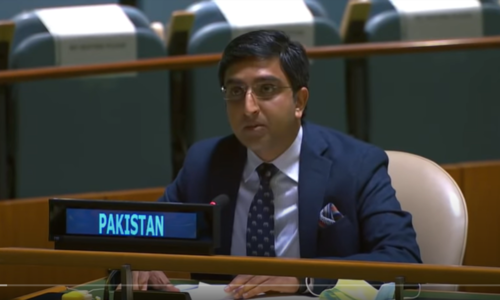
“Inter-governmental negotiations (IGN) remain the only credible platform for a comprehensive reform of the council,” Ambassador Munir Akram said while re-affirming Pakistan’s strong opposition to creating new permanent members.
“Any attempts to undermine or derail the IGN process will prove counterproductive,” the Pakistani envoy said when the long-running IGN process resumed in New York on Monday.
Having failed to evoke support for their bid for permanent membership of the council, he said that G-4 members were trying to create the "fear" that the opportunity for reform may soon be lost unless their procedural moves to short circuit the process were endorsed.
“We are prepared to breathe new life in IGN but some states are bent upon killing the process,” Ambassador Akram said.
Full-scale negotiations to reform the UNSC began in the General Assembly in February 2009 on five key areas; the categories of membership, the question of veto, regional representation, size of an enlarged Security Council, and working methods of the council and its relationship with the General Assembly.
Despite a general agreement on enlarging the council, as part of the UN reform process, member states remain sharply divided over the details.
The G-4 have shown no flexibility in their push for expanding the UNSC by 10 seats, with six additional permanent and four non-permanent members.
On the other hand, the Italy/Pakistan-led Uniting for Consensus (UfC) group opposes any additional permanent members, saying it would make it less representative, less effective and more divided, and will diminish the right of the vast majority of the UN membership to serve on the body.
UfC has proposed a new category of members that are not permanent with longer terms and with a possibility of getting re-elected.
The Security Council is currently composed of five permanent members which include Britain, China, France, Russia and the United States, and 10 non-permanent members elected to serve for two years.
In his remarks, Ambassador Akram said that the UfC proposal to add 11 new non-permanent seats would redress the "deficit" of equitable representation in the UNSC as it accommodates the interests of all groups.
"In 1945, the council represented 20 per cent of the membership of the United Nations. Today, it represents 8pc of the membership. In 1945, there was one non-permanent seat for eight member states. Today, there is one non-permanent seat for 19 member states."
He also pointed out that a third of UN members have never served on the council while Saint Vincent and the Grenadines is only the second small island developing state to ever serve on the UNSC.
The Pakistani envoy said UfC’s proposal can accommodate the aspirations of the African Group, small island developing states, the Arab Group and the Organisation of Islamic Cooperation (OIC). "The G-4 is unlikely to apply Africa’s regional approach to their own regions," he said.
The consensus-based African model is anchored in the twin imperatives of "representation" and "accountability", he pointed out.
"Pakistan and the UfC are keen to build on the progress made during IGN’s previous sessions," Akram said, adding that it was only through dialogue and consensus that a solution could be achieved.
“We are ready and willing to work with you to promote this objective,” the Pakistani envoy said.
'Human rights bodies, media exposing Indian oppression in IIOJK'
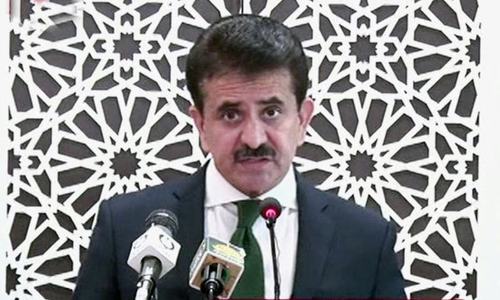
Meanwhile, Foreign Minister Shah Mahmood Qureshi said on Tuesday that international human rights organisations and the media are exposing Indian oppression in occupied Kashmir, Radio Pakistan reported.
In a statement, he said that India's Republic Day — being celebrated today (Jan 26) to commemorate the day the Indian constitution came into effect — is being observed as a "Black Day" by Kashmiris across the world.
"The people are protesting as their rights have been usurped," he said. The foreign minister said that minorities feel unsafe in India, adding that instead of democracy "black laws are being imposed in the neighbouring country".
Qureshi said that the negative policies of the BJP government were also affecting the Indian economy. He added that all countries neighbouring India, including Bangladesh, Nepal and China, were annoyed over Delhi's posturing.