‘Open merit policy has caused doctors’ acute shortage at healthcare facilities’


 0
0


KARACHI: There is an urgent need to address acute shortage of doctors at healthcare facilities. The situation has resulted mainly because women constituting the majority of medical college students do not become part of the workforce and those who do fail to fulfil their professional requirements.
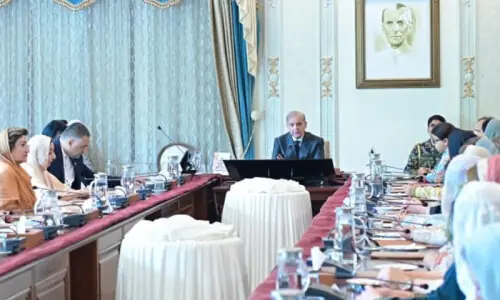
This issue was raised at a seminar titled ‘Educational chaos in the country’ organised by the Human Rights Committee of the Pakistan Medical Association at the PMA House on Saturday.
Highlighting how grave doctors’ shortage is at hospitals, Dr Amjad Siraj Memon, the principal of Dow Medical College, said it’s so serious that doctors were hard to find especially at night shifts.
“The problem is societal mindset hasn’t changed while we let our girls pursue higher education. The open merit policy in place at medical colleges for over two decades has encouraged more and more women to get admission to medical colleges over time. But, a significant number of them are either forced to abandon their studies or leave their profession as soon as they get married,” he explained.
Doctors call for restoration of the Pakistan Medical and Dental Council
He regretted that several female doctors, who were able to practice, declined to treat male patients and do night shifts. “It’s ironic that on the one hand we talk of open merit policy and on the other harbour gender discrimination. A doctor must be able to look after all his or her patients without any gender bias.”
He pointed out that the open merit policy introduced on court’s orders had brought about drastic change in the healthcare system in 23 years and needed urgent intervention.
Additionally, he noted, the country had been experiencing brain drain for many years, making the situation worse.
Speaking about the positive changes, he said today it’s possible for a poor man’s child to get medical education as institutions offered funding support and scholarships.
Violation of rights
The event also saw speakers criticising the federal government for introducing a medical examination system that favoured students of Punjab and Khyber Pakhtunkhwa and described it as a “violation of Sindh’s fundamental right to education”.
There was strong condemnation of the Pakistan Medical Commission (PMC).
“Under the medical tribunal bill approved in the joint sitting of parliament, a doctor can get seven-year imprisonment and fine of Rs50 million,” Dr Qaiser Sajjad representing the PMA-Centre said, arguing that the government should have legislated for cancelling the licence of the doctor found guilty of medical negligence.
He also criticised the federal government for introducing an exam after MBBS that, in his opinion, would open doors for corruption.
He called for the restoration of the Pakistan Medical and Dental Council as an elected, independent and transparent body.
Highlighting flaws in the police education and training system, DSP Mohammad Tariq Mughal, the principal of School of Investigation, said there were no police reforms in seven decades and the current police system of 1861 needed to be changed, if there was a political will to improve police operation.
“It suited the British needs and was made with an aim to keep the locals away from top administrative posts,” he said, emphasizing that it was critical to bring major police reforms since the department had the fundamental job to ensure law and order in society.
Sharing her concern over the dismal state of education, bureaucrat-turned politician Mehtab Akbar Rashdi said so much needed to be done to rectify the education system that could never get priority status by the state.
“One single step that could bring immediate change would be to make it mandatory for all government officers to enrol their children in public sector schools. If this is implemented, I am sure that government schools currently deprived of basic facilities will soon be upgraded.”
Dr Mirza Ali Azhar, Dr Tipu Sultan and Dr Jaipal Chhabria also spoke.
Published in Dawn, January 24th, 2021