1
1

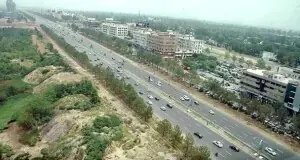
THE University of Karachi is spread over acres of land, but its vast area lies deserted which can be used to cultivate vegetables to meet the growing need of food in the province.
Apart from several buildings dedicated for faculties, laboratories and departments, the KU campus houses a separate building of Higher Education Commission, administration, numerous canteens, a residential colony for its employees, bungalows for professors, including the official residence of the vice-chancellor, hostels for boys and girls, official rest house for KU guests, parking lots, a couple of mosques, parks, sports grounds, Rangers’ accommodation and water storage facility.
Besides, there is a huge and fertile agriculture land on the premises. While a small portion of the agriculture land is being used by KU employees to grow seasonal vegetables and fruits, its massive area remains abandoned and needs attention of the authorities to exploit the agriculture potential.
According to experts, one of the main reasons for price hike of vegetables is the low quality of seeds that take more time to grow but produce tasteless and low-quality vegetables. Most vegetables are grown in Punjab, Balochistan and Khyber Pakhtunkhwa compared to Sindh. There is a massive gap between demand and supply of vegetables in all provinces.
In order to meet the demand, vegetables are transported between the provinces by air and surface, bearing extra cost that inadvertently is added to the selling price, contributing to the price hike.
This can be controlled by utilising the abandoned land within Karachi, particularly in Karachi University. High-quality seeds will produce high-quality yield, save the cost of inter-provincial transportation, contribute to meeting the food demand of the province and lessen the burden on other provinces.
Given the importance of substantial fertile agriculture land of KU, the Sindh governor, who is also the chancellor the university, the vice-chancellor and the Sindh chief minister should look what can be done to exploit the university’s agricultural land.
Hasan Adil Malik
Karachi
Published in Dawn, December 27th, 2020