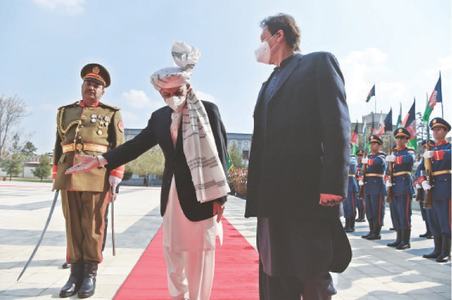
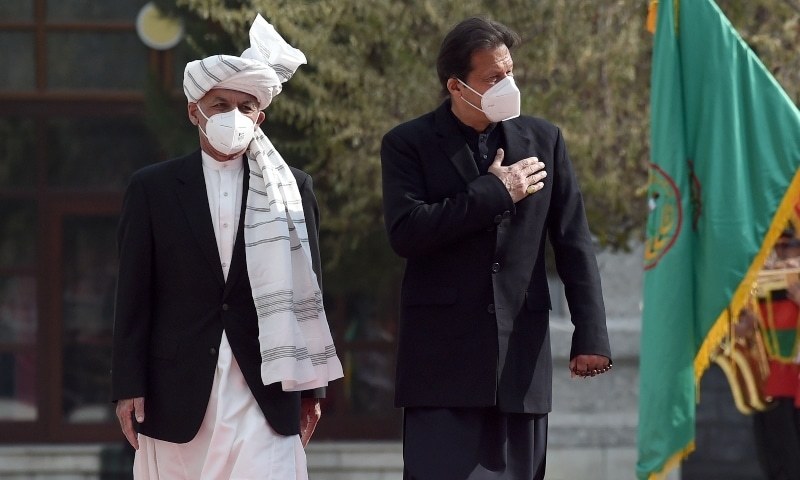
PRIME MINISTER Imran Khan’s daylong visit to Kabul on Thursday has come at a time when a question mark hangs over the Afghan peace process, and when the US is in the middle of a presidential transition. The latter development has to be considered because it remains to be seen how a Biden White House handles the Afghanistan file, specifically the key question of foreign troops’ exit from the country.
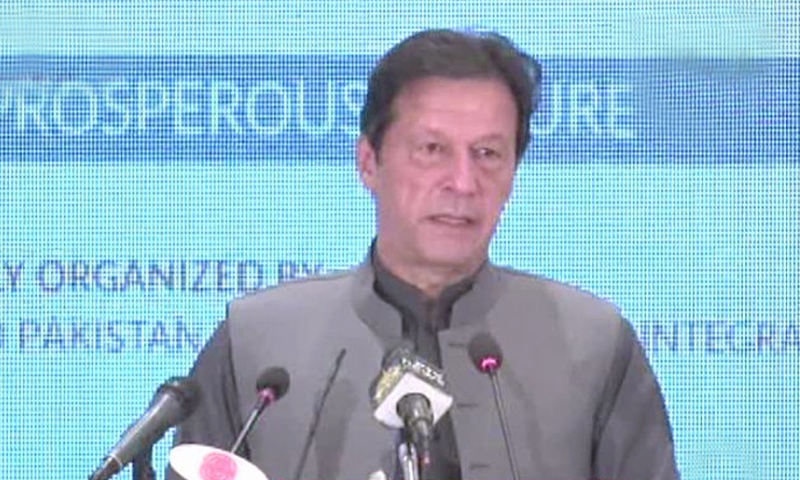
The fact is that the Pak-Afghan bilateral relationship has for the past several decades been viewed through the lens of the Afghan internal conflict, therefore any improvement in ties is linked to peace and stability in Afghanistan. Mr Khan’s meetings with Afghan President Ashraf Ghani remained cordial, and both leaders reiterated their commitment to peace as well as strengthening the bilateral relationship. Mr Khan offered this country’s full support when he told the Afghan side that if “Pakistan can help, please let us know”.
Engagement at the highest level between Islamabad and Kabul is essential for improved bilateral relations, as well as peace in the region. Too often spoilers have tried to drive a wedge between both capitals, which has prevented the relationship from developing to its full potential. Moreover, there are elements within the Kabul establishment that have no love lost for Pakistan, and are constantly blaming this country for Afghanistan’s internal woes.
While it is true that Pakistan has some leverage with the Afghan Taliban, blaming this country alone for Afghanistan’s problems is unwarranted. That country has been ruined by decades of involvement in its internal affairs by external forces, including the superpowers of the day, as well as failure of the Afghan political and tribal elites to accept each other. However, if the relationship is to move forward, both Islamabad and Kabul must build trust; regular exchanges between the respective leaderships can help reduce the trust deficit and address areas of concern.
Coming to the Afghan peace process, Donald Trump, in his final few months in the White House, has announced a fresh drawdown of US troops. While the move has been criticised by some in the American establishment, as well as Nato, the world will have to wait till Joe Biden assumes the US presidency to see what direction Washington will take vis-à-vis Afghanistan. Mr Biden has said that he too favours a troop withdrawal, but wants to move more slowly. Indeed, this is a critical time for the Afghan peace process.
Any major discrepancy in American policy may affect the peace deal the US signed with the Afghan Taliban in February, and a chaotic withdrawal of foreign troops may plunge Afghanistan back into civil war. Foreign forces, primarily America, must ensure that the withdrawal is orderly, while Afghan stakeholders — especially the government and the Taliban — must put in greater efforts for an internal peace deal.
Published in Dawn, November 21st, 2020