TEHRAN, Sept 28: Iran’s parliament voted on Wednesday to speed discussion of a bill that would force the government to scale back its cooperation with the UN atomic watchdog, state media reported.
The bill to limit the scope of nuclear inspections is in retaliation for a resolution approved by the International Atomic Energy Agency (IAEA) board of governors last week recommending Iran’s case be sent to the UN Security Council.
If approved, the bill would oblige the government to stop implementing the Additional Protocol of the nuclear Non-Proliferation Treaty (NPT) which allows UN inspectors to make short-notice visits to nuclear facilities.
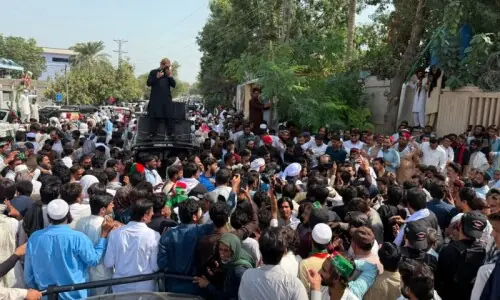
About 300 protesters gathered outside the British embassy in Tehran on Wednesday to denounce the IAEA resolution submitted by Britain, France and Germany.
“Nuclear energy is our legitimate right,” they chanted. “We will fight, we will die, we will never surrender.”
Riot police surrounded the walled embassy compound but the demonstration organised by students belonging to the hardline Basij militia was peaceful.
Tehran signed the NPT protocol in late 2003 in an effort to allay concerns that it may be developing nuclear weapons under the cover of an atomic energy programme. But Iran’s parliament has not ratified the protocol meaning that its implementation was not legally binding.
The bill was given single urgency status, meaning that it takes precedence over regular legislation, in a vote supported by 162 members, with 42 against and 15 abstaining, IRNA said.
“If the plan is approved, it will urge the government to stop the voluntary implementation of the Additional Protocol until our right to access nuclear technology for a fuel cycle is officially recognised,” IRNA quoted Parliament Speaker Gholamali Haddadadel as saying.
Iran’s Foreign Ministry said on Monday the Islamic state might stop implementing the Additional Protocol and resume uranium enrichment — which can be used to make atomic bombs — if the process to refer it to the Security Council was not halted.
On Tuesday, it added that it could scale back trade ties with those countries that backed the resolution to refer it to the UN’s top body.
The proposed legislation also requires the government to supply parliament with detailed figures on Iran’s trade with those countries that voted for the IAEA resolution.—Reuters