18 killed in suicide bombing near education centre in Afghan capital

A suicide bomber struck near an education centre in the Afghan capital on Saturday, killing at least 18 people in the latest attack to rock the conflict-wracked country.
Violence on the ground has spiked in recent weeks despite the Taliban and the Afghan government holding peace talks in Qatar to end the country's grinding war.
The suicide attack, which also wounded 57, happened late afternoon at the centre, which offers training and courses for students in higher education in a western district of Kabul.
“A suicide bomber wanted to enter the education centre,” Tareq Arian, spokesman for the interior ministry, said in a statement.

“But he was identified by the centre's guards after which he detonated his explosives in an alley.” He said the attack had left at least 18 people dead and 57 wounded.
“I was standing about 100 metres from the centre when a big blast knocked me down,” said local resident Ali Reza, who had gone to hospital with his cousin who was wounded in the blast.
“Dust and smoke was all around me. All those killed and wounded were students who wanted to enter the centre.”
The militant Islamic State group claimed responsibility for the attack in a statement on Telegram, without providing evidence, according to Reuters. The Taliban said they were not involved.
Residents in several districts of western Kabul belong to the minority Shia Hazara community, often targeted by IS extremists.
In the past, extremists have targeted several education centres and other facilities in the area.
In May, a group of gunmen launched a brazen daylight attack on a hospital in west Kabul that left several mothers dead. The gunmen were shot dead after hours of fighting with security forces.
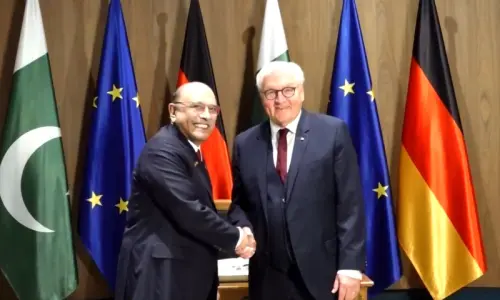
A statement issued by the Foreign Office said Pakistan "condemns in the strongest possible terms the inhuman terrorist attack" in Kabul.
"Pakistan condemns terrorism in all its forms and manifestations and will continue to support a peaceful and stable Afghanistan," it said, extending condolences to the families of the victims.
'World must take notice'
The suicide attack came hours after a roadside bomb tore through a bus east of Kabul, killing nine civilians. Officials blamed that blast on the Taliban.
On Friday, rights group Amnesty International said at least 50 people had been killed in attacks in the preceding week, accusing the Taliban and the Afghan government of failing to protect civilians.
“The world must sit up and take notice. Afghan civilians are being slaughtered on a daily basis,” said Omar Waraich, head of South Asia at Amnesty International.
“The international community must make the protection of civilians a core demand for their ongoing support of the peace process.”
Despite holding peace talks with the Afghan government in Doha since last month, the Taliban have only increased violence, in a bid to wield leverage in the negotiations.
The top US envoy to Afghanistan, Zalmay Khalilzad, said earlier this week that fighting was threatening the peace process.
US influence over Afghanistan's battlegrounds is on the wane, however, with the Pentagon looking to withdraw all its remaining troops by next May.
The Taliban have been quick to exploit the apparent lack of resolve, and began to push for fresh military gains as soon as they signed a withdrawal deal with the US in February.
With additional reporting by Naveed Siddiqui in Islamabad.