Missing school poses greater risk to children than coronavirus: UK advisers


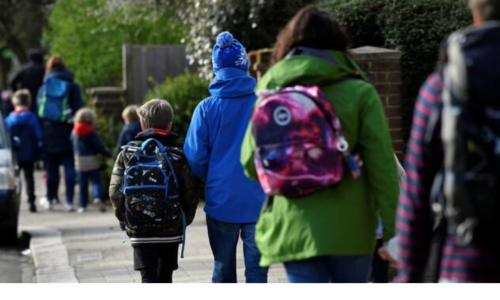
LONDON: The chief medical officers of the United Kingdom have said children should return to school after the summer holidays, warning that missing out on their education posed much bigger risks to them than catching Covid-19.
The rare joint statement from the top health advisers to the governments of England, Scotland, Wales and Northern Ireland represents a boost for British Prime Minister Boris Johnson who has said getting children back to school is a national priority.
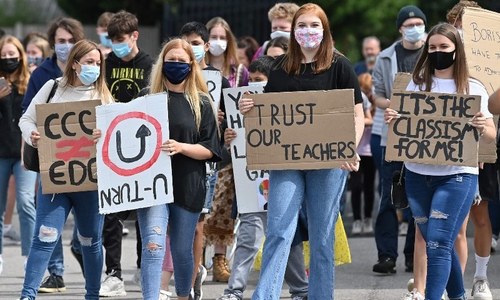
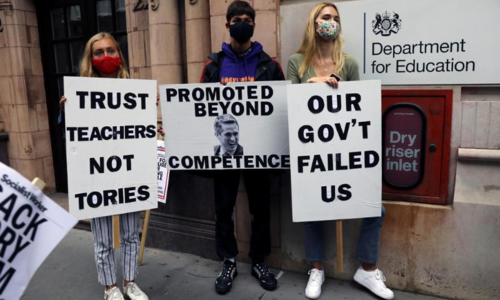
Confidence in the government’s approach to schooling during the coronavirus pandemic took a hit last week when education minister Gavin Williamson was forced into an embarrassing U-turn over examination results.
“Very few, if any, children or teenagers will come to long term harm from Covid-19 due solely to attending school,” they said. “This has to be set against a certainty of long-term harm to many children and young people from not attending school,” the CMOs said in a joint statement published late on Saturday.
Evidence showed that a lack of schooling increased inequalities, reduced opportunities and could exacerbate physical and mental health issues, the statement said.
By contrast there was clear evidence of a very low rate of severe disease in children, even if they caught Covid-19, and an exceptionally low risk of dying.
“The percentage of symptomatic cases requiring hospitalisation is estimated to be 0.1 per cent for children aged 0-9 and 0.3pc among those aged 10-19, compared to a hospitalisation rate of over 4pc in the UK for the general population,” the statement said.
Johnson has said reopening schools in September is a social, economic and moral imperative, insisting they would be able to operate safely despite the Covid-19 pandemic.
Separately, England’s chief medical officer was quoted as saying it would be foolish to count on a coronavirus vaccine being ready for use this year.
“I think if we look forward a year, I think the chances are much greater than if we look forward six months and we need to have that sort of timescale in mind,” Chris Whitty told Sky News.
“So planning for the next winter, it would be foolish to plan on the basis we will have a vaccine.
Published in Dawn, August 24th, 2020