Libya ceasefire first step on ‘arduous’ path to peace
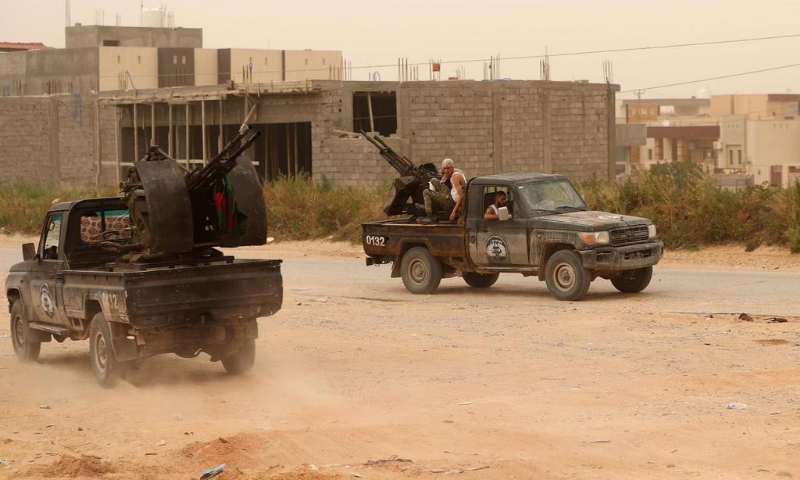
TRIPOLI: A surprise ceasefire announcement by Libya’s rival administrations offers a glimmer of hope for peace, but analysts caution scepticism after years of violence and as multiple foreign forces back opposing sides.
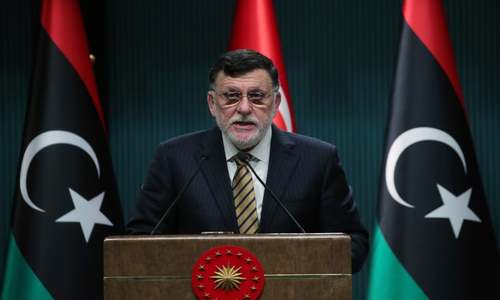
Fayez al-Sarraj, head of the UN-recognised Government of National Accord (GNA), based in the west in the capital Tripoli, and Aguila Saleh, speaker of the eastern-based parliament backed by military strongman Khalifa Haftar, each announced a ceasefire on Friday.
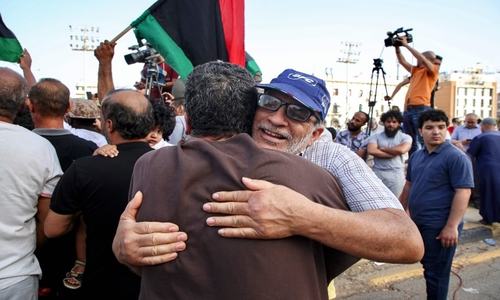
The leaders, in separate statements, said they wanted to end fighting and hold elections, drawing praise from the UN, the EU and several Arab countries.
Emhemed Shoaeb, a key member of talks that led to the last major agreement in 2015, said the announcement was a step “in the right direction” that showed a “desire to break with the madness” of the past.
European Union diplomatic chief Josep Borrell described it as a “constructive first step forward”.
But international pressure has sought to bring Libya’s leaders to an agreement several times in past years, and a lasting deal has yet to be reached.
“This is but one step in what will be an arduous process, especially since local parties distrust not only one another, but also international parties involved,” said Emad Badi, senior fellow at the Washington-based Atlantic Council think tank.
Since the 2011 toppling and killing of longtime dictator Moamer Qadhafi in a Nato-backed uprising, Libya has been torn by violence, with its rival administrations vying for control and international forces militarily backing each.
The North African country, which has the continent’s largest proven crude oil reserves, has become a battleground for tribal militias, jihadists and mercenaries.
It is also a major gateway for desperate migrants bound for Europe.
“I have always said that Libyans will get serious about a truce when they all hit a wall... this may be it,” said Karima Munir, a banker from Tripoli.
“Both (sides) know that there is no winning party if the conflict continues — and their backers have reached this realisation too.” Haftar, the eastern military commander, launched an offensive to seize Tripoli from the GNA in April 2019, but was beaten back.
Fighting has stalled around the central Mediterranean port of Sirte, the gateway to Libya’s eastern oil fields and export terminals, and to the key Al-Jufra airbase to the south.
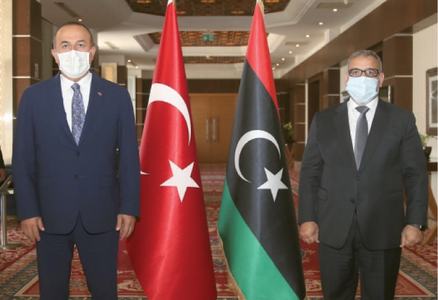
While the GNA is supported by Turkey and Qatar, Haftar receives assistance from Egypt, the United Arab Emirates and Russia.
For Sarraj, Sirte and Al-Jufra — currently under the control of pro-Haftar forces — must be demilitarised.
Saleh, on the other side, made no mention of demilitarised zones, but instead proposed the formation of a new presidential council — replacing Sarraj’s administration in Tripoli — to be based in Sirte.
The discrepancies are “revealing”, said Wolfram Lacher, researcher at the German Institute for International and Security Affairs.
“The special interests of these actors could easily derail the talks at any stage,” Lacher said.
Demilitarisation is “an American, British and German plan aimed at stemming Turkish and Russian influence on the ground,” he said, adding that both Russia and the UAE would oppose it.
Badi, from the Atlantic Council, said the demilitarisation of Al-Jufra would be “a point of contention”, noting the “sizable number of Russian mercenaries” in the area.
Russia “has an incentive in maintaining a presence in Jufra and in undermining what is de facto a US-backed process that would see Moscow’s influence wane,” Badi said. For some Libyans, talk of Sirte as a future seat of government recalls plans by Qadhafi to turn his home town into the country’s capital.
“It’s ironic that Qadhafi’s lifetime goal of making Sirte the seat of government may be realised now,” Munir, the banker, said. “He must be smiling in his grave.”
Published in Dawn, August 23rd, 2020