Mystery Russian projectile raises fears of arms race in space

WASHINGTON: The United States this week accused Russia of having tested an anti-satellite weapon in space, a charge Moscow has denied, saying the device was a “special instrument” for inspecting orbiting Russian equipment.
Whatever it was, the incident marks for Washington a rare military escalation in space.
The ability of one satellite to attack another was until now merely theoretical.
The United States, Russia, China and, since 2019, India, have been able to target satellites with Earth-launched projectiles, but these explosions create millions of pieces of debris in orbit, prompting the world powers to refrain from such tests.
This week’s incident may be seen as a message to Washington, which under President Donald Trump is building up a new “Space Force” wing of its military.
The entire US military, from war planes to infantry, depend on space-based technology for navigation, communications and intelligence
Space Force’s commander, General Jay Raymond, on Friday reiterated that “space is a warfighting domain just like air, land and sea.”
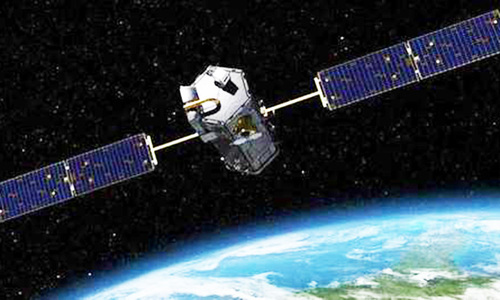
In November 2019, Russia launched a satellite named Cosmos 2542. A week later, that satellite surprised observers when it released a sub-satellite, Cosmos 2543, capable of maneuvering in orbit to observe, inspect or spy on other satellites.
This sub-satellite moved close to a US spy satellite, USA-245, and to another Russian satellite. A game of cat and mouse began in orbit, easily observable from Earth by astronomers and the US military, which publicly expressed its concern.
On July 15 at around 0750 GMT, Cosmos 2543 (the sub-satellite with a surface area of less than a square meter, according to the US military), released an object at a high relative speed, around 200 meters per second, said astronomer Jonathan McDowell.
Dubbed “Object E” by the United States, it is still in orbit and appears not to have hit anything. Its size, shape and purpose remain a mystery, but that does nothing to diminish the threat it may pose.
In orbit, satellites speed through the void at tens of thousands of miles per hour. The smallest contact with another object risks smashing a hole in its solar panels or damaging or even destroying it, depending on the size of whatever it may hit.
In space, the difference between a satellite and a weapon is therefore theoretical: whatever its function, “Object E” is a de facto “projectile” and therefore a “weapon,” the US says.
It is the equivalent of a “bullet” in space, said Christopher Ford, assistant secretary of state for international security and nonproliferation.
“There’s no such thing as a fender bender up there.” Moscow has implicitly admitted as much by accusing Washington and London of having satellite inspection or repair programs that can be used as “counter-satellite weapons.” The United States has maneuverable military satellites in orbit which can launch smaller satellites.
But it’s unclear if the US has the capability to launch high-speed projectiles as the Russians have just done, said Brian Weeden, a space security expert at the Secure World Foundation in Washington. “But they probably could if they wanted to,” he said.
“Russia may be trying to send a strategic message about the vulnerability of US systems,” Weeden said. Spy satellites are enormous, extremely costly and rare.
Russia is far less dependent upon satellites than the United States, and its satellites are much less expensive, he said.
Published in Dawn, July 26th, 2020