On multiple days since mid-June, official figures for coronavirus-related deaths in the country have been well over 100. According to press releases issued by the National Command and Operation Centre, 111 people lost their lives to Covid-19 on June 16 and 136 on June 17.
Just last week, the Covid-19 official death toll in a single day was 153 — the highest in 24 hours since the start of the outbreak in Pakistan at the end of February. As these figures continue to climb, the daily total tests towards the end of June stand at an average of 28,500, a number far lower than the 100,000 daily testing milestone the government has calculated for July.
It is evident that, much like the global trend in countries where Covid-19 cases have soared, Pakistan’s daily cases and deaths are growing. In fact, the current scenario was predicted by healthcare professionals who had warned of a rise in coronavirus cases if restrictions were lifted at the end of May.
Although the authorities may argue that cases and deaths here are still lower than in many of the worst-hit countries — such as the UK where over 1,000 coronavirus fatalities have been reported in a single day at the peak of the infection — the reality is that Pakistan is still over a month away from what authorities and think tanks have estimated to be the ‘peak phase’.
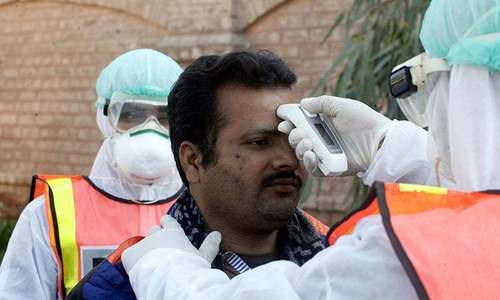
As we approach that dreaded period, the authorities must focus their resources on two key areas: increased testing capacity and data-driven decisions. Testing must be ramped up, and fast, in order to obtain a realistic picture of the spread of Covid-19. While 100,000 daily tests are not enough in a population of 200m, at the moment we are very far from even that target.
Increased testing and intelligent data gathering are the only tools the government has to enforce the smart lockdowns it views as its mitigation strategy. These figures are the roadmap; in the absence of accurate data, any strategy will be flawed.
Published in Dawn, June 24th, 2020