Coronavirus pandemic leaves education in limbo in Pakistan


 27
27


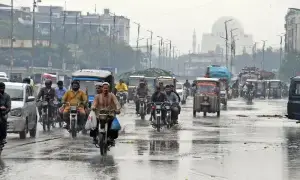
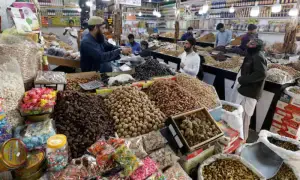
Markets and malls across Pakistan are open for business and brimming with people, but schools and colleges remain deserted and show no signs of reopening soon.
The boom in commercial activity has come as the country disregards surging coronavirus cases to push forward with plans to ease lockdown measures.
Intercity travel, including domestic flights, is also picking up pace ahead of Eidul Fitr, which marks the end of Ramazan.
Critics have denounced this return to normalcy as hasty and inadvisable, particularly since the country has recorded more than 1,000 cases every day in May, with just a single exception.
However, while commercial activity is resuming across the country, there is still little clarity on the future of academic activity, as doubts continue to swirl over an expected resumption by mid-July.
Government officials and education experts fear that schools may not reopen for another six months, particularly in remote areas where safety guidelines, hygiene and social distancing rules, are hard to implement.
“It's a challenging task for the government to reopen schools and colleges during this coronavirus pandemic, but the pressure is increasing every day,” Professor Mugheesuddin Sheikh, a Lahore-based educationist told Anadolu Agency.
“We never anticipated anything like this; it's more than a war-like situation. Is our education system equipped to deal with this [crisis]? The answer is no," he added.
Across the country, high school students have been promoted to the next classes without taking regular examinations and admissions to colleges will be granted on the basis of the previous year's results.
While many universities and schools have started online classes, a majority of educational institutions in Pakistan do not have the system for distance learning, according to Sheikh.
“Only a few universities have proper virtual education facilities. Others are partially equipped. Many teachers are not even trained,” said Sheikh, who heads the media and communication department at a university in Lahore.
No definite timeline
Sindh Minister for Education Saeed Ghani said schools could remain closed for up to six months due to the risk of coronavirus spreading among children.
“We cannot take such a risk in the current circumstances. It [reopening of schools] totally depends on the pace of the epidemic. I am not in a position to say if schools will reopen [even] on July 15,” Ghani told Anadolu Agency.
“As of today, I can say there are no chances of schools reopening soon. It may be a month or two, or even six.
“Our adults are not following necessary precautions, so how can you expect that from children?” he said, referring to the huge number of shoppers seen in markets and shopping centres over recent days, many not following any safety measures.
Ghani said his province’s education department was already preparing an online curriculum, and working on other models to ensure children's education could continue during these uncertain times.
Partially endorsing Ghani’s view, Sheikh said, "In the given circumstances, schools being closed until September-October is understandable. But if it goes beyond that, then next year's session and examinations will be affected too.”
Health experts have also cautioned against reopening schools too quickly.
“It will be a very risky and dangerous step if schools are opened at this stage. We strongly oppose this,” Dr Qaisar Sajjad, secretary general of the Pakistan Medical Association (PMA), told Anadolu Agency.
"We have a limited number of children’s hospitals in Pakistan. If, God forbid, there is an outbreak among children, we won't be able to handle it. There really is no justification to immediately reopen schools," he said.
However, Haider Ali, chairman of the Private Schools and Colleges Association, does not agree with the decision to keep schools closed, contending that children at home or in the streets were at higher risk.
“The risk factor doubles if children stay out of schools for a longer period. On one hand, they are vulnerable to depression and anxiety due to being confined to their houses, while on the other, they will lag behind in their studies,” he said.
“The situation is worse in slums and rural areas, where children are playing in the streets but not going to school. Schools, at least, have a controlled atmosphere and can implement safety guidelines," Ali said.
Alternatives needed
Professor Anwar Ahmed Zai, an educationist who heads a private examination board in Karachi, said the government and educational institutions have to devise creative ways to dilute the impact of Covid-19 on education.
“Things will not be the same, whether it's the economy or the education system. We have to reshape our education system and come up with some alternatives to bear the impact of the pandemic,” Zai told Anadolu Agency.
Apart from virtual education, he suggested that schools could operate in shifts of lesser duration to ensure social distancing.
“It will not be an ideal situation but we have to explore our options. We have to live with this virus for at least the coming few years,” said Zai.
Sharing a similar view, Sheikh suggested the formation of a “capsule curriculum” together with a shift-based system.
“Apart from the obvious miseries, this pandemic also presents some opportunities for developing countries like ours. We have a chance to rethink and reshape our education system to meet the needs of the post-pandemic world,” he said.