Malaria deaths could double, warns WHO


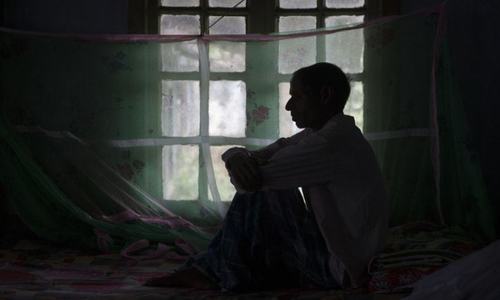
GENEVA: The new coronavirus pandemic could severely disrupt access to anti-malaria nets and drugs in sub-Saharan Africa, the World Health Organization said on Thursday, warning that malaria deaths risked doubling if efforts are not urgently scaled up.
The UN health agency called on countries in sub-Saharan Africa, where nearly 95 per cent of all the world’s malaria cases and deaths occur, to distribute malaria prevention and treatment tools now, before they become overwhelmed with novel coronavirus cases.
“Severe disruptions to insecticide-treated net campaigns and access to antimalarial medicines could lead to a doubling in the number of malaria deaths in sub-Saharan Africa this year compared to 2018,” the WHO warned, citing new modelling analysis.
The analysis, it said, considers nine scenarios for potential disruptions in access to core malaria control tools during the pandemic across 41 countries, and the resulting possible increases in cases and deaths.
Under the worst-case scenario, in which all campaigns to distribute insecticide-treated nets are suspended and there is a 75-per-cent reduction in access to effective antimalarial medicines, “the estimated tally of malaria deaths in sub-Saharan Africa in 2020 would reach 769,000,” WHO said.
That is twice the number of deaths reported in the region in 2018, it stressed.
“This would be the highest number of deaths seen in the region since the year 2000,” WHO Africa director Matshidiso Moeti told journalists during a virtual briefing from Brazzaville.
The hike would have particularly dire consequences for young children, with those under five making up more than two-thirds of all malaria deaths in 2018.
‘Critical window’
WHO stressed that so far, sub-Saharan African countries had reported relatively few cases in the Covid-19 pandemic, which has killed more than 180,000 people globally and infected more than 2.6 million.
But the agency, which has long warned that weak health systems in the region risked becoming seriously overwhelmed as cases increase, said the virus was picking up pace there.
“This means that countries across the region have a critical window of opportunity to minimise disruptions in malaria prevention and treatment and save lives at this stage of the COVID-19 outbreak,” it said.
Not acting now could have serious repercussions, Moeti warned.
She pointed to the experience of tackling the Ebola crisis from 2014 to 2016, when more people died from diseases previously under control than from the epidemic.
“Let us not repeat that with COVID-19,” Moeti said.
“I urge and encourage all countries to maintain malaria interventions in line with WHO recommendations to ensure that health workers and communities are protected.”
In a separate statement on Thursday, the WHO also reiterated its call to maintain immunisation services worldwide to ensure the measures taken to halt the pandemic do not end up sparking a resurgence of vaccine-preventable diseases like measles and polio.
“While the world strives to develop a new vaccine for Covid-19 at record speed, we must not risk losing the fight to protect everyone, everywhere against vaccine-preventable diseases,” WHO chief Tedros Adhanom Ghebreyesus said in the statement.
“These diseases will come roaring back if we do not vaccinate.”
Published in Dawn, April 24th, 2020