TODAY marks World Earth Day.
This year’s theme is ‘climate action’, but unlike in the past, there will be no vibrant scenes of marches in the streets or large public gatherings.
There will be no packed speaking events inside auditoriums and stadiums.
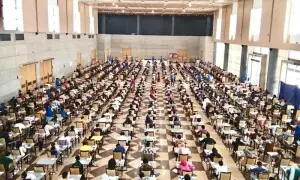
And there will be no schoolchildren holding special events to celebrate the day, since most education institutes have been closed.
Covid-19 has disrupted nearly every aspect of ‘normal’ life, and while most other issues have understandably taken a backseat in the midst of the pandemic, perhaps it is time to question the conditions we had come to accept as ‘normal’ in recent decades, particularly when it came to our attitudes towards the environment.
When confronted with nature’s absolute power, human civilisation suddenly appears so fragile and helpless.
As a reminder, just before the novel coronavirus grabbed all international headlines, Australia was struggling to contain horrific wildfires that ravaged 13.6m acres of land over a period of eight months, only to be finally extinguished last month.
According to an estimate provided by the government, the bushfires may have released up to 830m tonnes of carbon dioxide into the atmosphere, exceeding the country’s annual greenhouse gas pollution.
In Iceland, mourners held a funeral for the first glacier lost to climate change.
Meanwhile, floods ravaged parts of Somalia, South Africa, Iran, Nepal, Bangladesh, Myanmar, Italy, the UK and the US throughout the foregoing year.
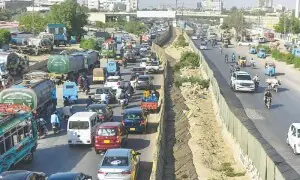
Here at home, besides battling heavy monsoon rainfall and flooding, parts of Pakistan and India were enveloped in a blanket of smog, once again reminding us that (like viruses) climate change does not recognise human-created borders and hubris.
And despite producing only a fraction of the total global greenhouse gas emissions, Pakistan sits in an uncomfortable fifth position in the Global Climate Risk Index 2020.
According to the report released by Germanwatch, between 1998 and 2018, nearly 10,000 people died due to extreme weather conditions, while the economy suffered losses of up to $3.8bn.
In recent months, however, something unusual is being witnessed in the world.
With large-scale lockdowns being enforced and much of the global economy coming to a halt, the skies are clearing up and pollution is lower than it has been in years.
But with the virus-related death count rising with each passing day, doctors and hospital staff being overwhelmed with the sheer volume of patients admitted for an illness that we cannot cure and do not even completely understand, mass layoffs and downsizing resulting in people losing their livelihoods, and the possibility of large-scale hunger looming in the distance, there is little reason to celebrate.
However, if greater wisdom prevails, there are lessons to be learnt, which must extend beyond the virus’s lifetime.
Unfortunately, our collective memory is fleeting, and it is not clear whether we will take a different path.
Published in Dawn, April 22nd, 2020