Govt to provide seed money for IHRA, approve budget in upcoming fiscal year
ISLAMABAD: The government has finally assured that seed money for the Islamabad Healthcare Regulatory Authority (IHRA) will be provided and its budget approved for the upcoming fiscal year.
The IHRA has a mandate to regulate public and private hospitals, clinics, laboratories and blood banks and to provide redress to citizen complaints and control quackery in the capital.
Although legislation for the authoritywas passed in 2018, Islamabad residents have not had a body to address complaints against healthcare establishments and practitioners because the IHRA has not been made functional to date.
IHRA Board Chairman Dr Syed Fazle Hadi told Dawn that the Islamabad Healthcare Regulation Actwas passed in 2018, closely followed by the general election, which put the matter on the back burner. Although the PTI government did form the IHRA’s board by the end of 2019, there was little improvement as the government’s attention was diverted towards the coronavirus pandemic.
Special meeting to establish capital’s first health regulatory authority chaired by special assistant to PM
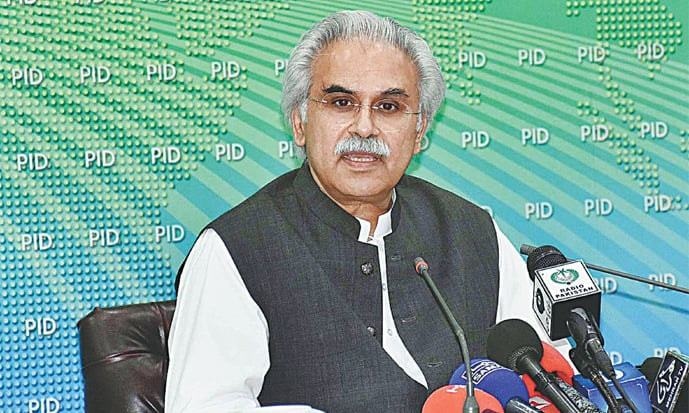
Dr Hadi said that they recently reached out to Special Assistant to the Prime Minister on National Health Services Dr Zafar Mirza to listen to their issues.
“Dr Mirza decided to hold a meeting of the board in which after hearing our issues, he assured us that Rs270 million in seed money would be provided to make the authority functional. Moreover, he also ensured that the budget will be allocated for the authority,” he said.
To a question, Dr Hadi said that although a CEO has been appointed at the authority, a number of directorates - including inspection, IT, legal and complaints - have not been established yet.
“We also want to have our own ombudsman to ensure the authority functions smoothly and transparently,” he said, adding: “As the authority will be able to monitor public and private sector institutions, residents of the capital will get relief regarding their complaints about health facilities.”
According to an official statement issued on Saturday, Dr Mirza presided over a special meeting of the IHRA board. Others present at the meeting included Dr Hadi, CEO Dr Syed Ali Hussain Naqvi and members Dr Abid Z. Farooqi, Dr Zabta Khan Shinwari, Dr Raisa Begum Gul, Dr Hafiz Azizur Rehman, Dr Waqar Aftab Malik and Dr Sabeen Afzal.
Dr Mirza said the with the establishment of the IHRA, Islamabad’s population of 2.3 million people will finally have a forum for complaints about public and private healthcare establishments and practitioners. Unlike Punjab, Sindh and Khyber Pakhtunkhwa, Islamabad has never had such a forum before.
Dr Mirza said that the IHRA is expected to create a model healthcare delivery and regulatory system in Islamabad that can be emulated in the rest of the country.
He said this would ensure universal health coverage and strengthen the primary healthcare system.
He added that the government would extend all support to the IHRA and that the authority should maintain transparency and accountability in its operations.
Dr Mirza made suggestions to the board about how to streamline the authority’s planning, and said he expected it to coordinate and act as a focal point for provincial healthcare commissions.
IHRA CEO Dr Naqvi said in his briefing that even though the act was passed in 2018,the people of Islamabad had no authority to address complaints against healthcare establishments and practitioners.
He said Islamabad is the tenth largest district and its population growth rate is the fastest in the country, with a population of 2.3m and 3,100 private clinics and 1,100 medical stores.
Published in Dawn, April 19th, 2020