China virus epicentre eases travel curbs as cases fall


 5
5
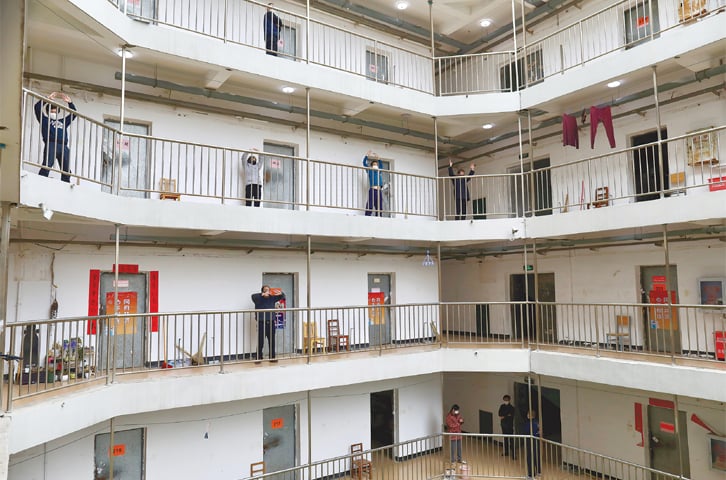

BEIJING: China eased travel restrictions on Thursday on two cities at the epicentre of its coronavirus outbreak as the number of fresh infections dropped to a new low.
Another 11 people died nationwide, the lowest daily increase since late January, bringing the toll in China to 3,169 deaths, according to the National Health Commission.
There were only eight new cases in Wuhan, the central city where the virus first emerged in December before growing into a national crisis and a pandemic.
It is the first time that new cases in Wuhan, the capital of Hubei province, have fallen to single-digits since figures started to be reported in January.
“The peak of the epidemic in China has passed,” National Health Commission spokesman Mi Feng said at a regular briefing. “The number of new cases continues to decline and the spread of the epidemic has generally remained at a low level.”
With new infections falling dramatically in recent days, authorities this week began to loosen some restrictions on Hubei’s 56 million people, who have been under quarantine since late January.
Qianjiang
The government in Qianjiang, a city of one million, said on Thursday it will arrange special transport to take healthy workers to their jobs both inside and outside the province.
“Workers stranded in Qianjiang can be sent back to their workplaces via a point-to-point transport system, except to Beijing,” a circular issued by the city government said.
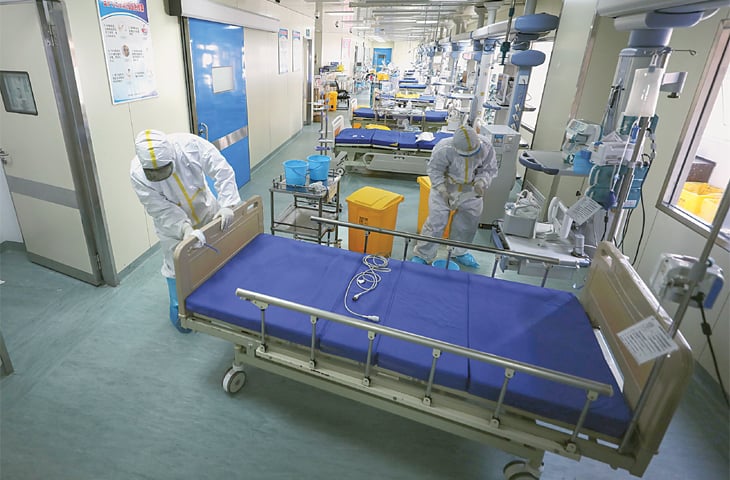
Hubei has adopted software that tracks a person’s travel history to determine whether they have come into contact with people suspected of carrying the virus and should be quarantined.
People leaving Qianjiang will need a “green health code” indicating they have not come into contact with anyone diagnosed, or else they should have proof of a health assessment, the statement said.
The local government in Shishou, a small city of just over half a million, was also allowing workers to leave.
Healthy people living in low-risk areas of the province can now travel within Hubei. While Wuhan is not included in the loosening of restrictions, some of the city’s companies were told they could resume work.
Elsewhere in the country, only one non-imported case of the illness was recorded, but as virus hotspots emerge overseas, China fears infected people arriving from abroad could undermine its progress in tackling the outbreak.
Six imported cases were reported on Thursday, bringing the total from overseas to 85, health officials said.
Financial centre Shanghai joined Beijing by imposing a 14-day quarantine on anyone arriving from hard-hit countries across Europe, North America and northeast Asia.
A total of 80,793 people have now been diagnosed with the infection in China.
President Xi Jinping said this week during his first visit to Wuhan since the crisis erupted that the spread of the disease has been “basically curbed” in the country.
Published in Dawn, March 13th, 2020