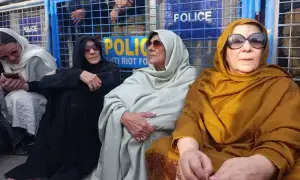
“I used to keep biscuits on the doorstep and leave,” said Bilquis, talking about her one-year-old son. “When I would come home, often he would be sleeping somewhere. Once I found him sleeping next to an open gutter.”
Bilquis is one of the many maids that live in Manzoor Colony in Karachi. She narrates the hardships she faced while doing housework in one of the Defence bungalows for Rs18,000 a month. “In one year we lost 19 members of our family. We don’t know why they passed away. For example, my father-in-law was having his meal when he suddenly died”.
As there was no one to babysit her children, Bilquis would have to leave her three sons and go work from morning to evening to earn her livelihood. Her tale is just one of many.
As Women’s International Day celebrates females from across all walks of life, the unsung stories of the housemaids who eke out a living cleaning up after others are often overlooked.
In the evening, troops of women return home to Manzoor Colony after spending the day mopping and washing dishes. In a microcosm economy of their own, they have unofficial ‘stops’ near Defence Imam Bargah and other places where rikshawalas wait, charging about Rs30 per passenger.
Each rikhshawala then takes in as many females that can squeeze in and drives them home to take care of the toddlers and kids that can be seen unsupervised on every street.
‘I am grateful that I can earn Rs15,000 a month. In the village, I was paid Rs200 per day for hard labour from 8am to 4pm’
“I am grateful that I can earn Rs15,000 a month. In the village, I was paid Rs200 per day for hard labour from 8am to 4pm,” said Razia, an older lady whose husband is now blind. Another carried a one-month-old boy in her arms as she came back from working in two different homes that paid her Rs5,000 each.
Manzoor Colony supplies maids to many of the luxurious bungalows that line Defence’s roads. The stark difference between the flies-infested ramshackle dwellings of the colony and the sunny vistas of roads dotted with parks in one of the poshest areas of the city hits one’s heart hard.
The other end
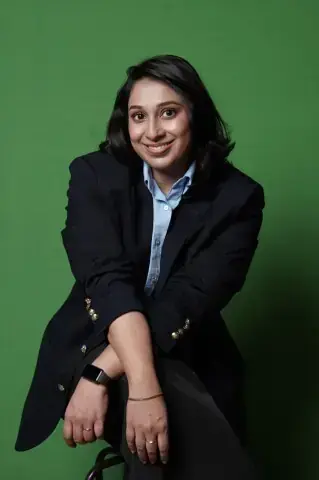
“There are many women who work at home, struggle with in-laws and yet succeed. Those are the real heroes, the ones we should learn from. It was not a difficult journey for me, frankly,” said Sima Kamil, president and CEO of United Bank Ltd in an interview with Dawn.
While Ms Kamil may have had support at home to become one of the most powerful women of Pakistan’s banking sector, there are many who don’t as a survey carried out by the Business & Finance team illustrates. (See page 4 for survey results.)
Nearly 70pc of the respondents were from the metropolitan cities of Karachi, Lahore and Islamabad. Keep in mind that the Dawn website’s audience consists of those who have access to the internet and a level of fluency in English thus indicating educated women.
Among the working women, nearly 40pc had felt threatened at their workplace and 41pc felt they were paid less than their male counterparts. Even if circumstances allow women to earn a living, the odds are stacked much higher against them.
Results suggest that even though they belong to backgrounds far more privileged than those of katchi abadis, they still are not allowed to make their own life’s decisions. The saddest response was to the question whether they would be willing to work if they were allowed to — a whopping 77pc answered yes.
Look around your workplace, two out of five women feel unsafe while working. A poll taken by Dawn in 2018 that went into details of workplace harassment noted that nearly half of working women questioned were not aware that harassment is a crime under the Protection Against Harassment of Women at Workplace Act, 2010.
But more than half of the women surveyed in 2018 believed that women should quit their jobs when harassed or abused. Since the poll reported that 83pc of the women think that some men believe they will get away with inappropriate behaviour, and hence continue to harass, the advice to quit is more practical than surprising.
A big takeaway from the 2018 survey was that only 17pc of those who experienced harassment approached their organisation’s internal inquiry committees. Testimonies suggested that women lack faith in the process of formal reporting mechanisms.
Seventy-three countries surveyed by the International Labour Organisation in a report published in 2018, Pakistan had the highest overall hourly average gender pay gap. At 34pc, Pakistan’s gender pay gap is more than double the global average with women accounting for almost 90pc of the bottom 1pc wage earners in the country.
So even if women get to earn a living, they may face harassment in exchange for a pay less than that of their male counterparts.
Meri zindagi, meri marzi
A feminist would argue that women should not be ‘allowed’ to work as it is their decision. Given that women across the country march for rights over their own bodies and are heavily contested for it, demanding the right to live as they see fit seems like a stretch.
“I never found Pakistani men to be misogynistic personally. I think our society is patriarchal,” said Ms Kamil. “Misogynists think women are inferior and hate them; patriarchy is when men are the sole decision-makers. I have found that most conservative men, the extremely religious ones, have been more respectful than the so-called ‘western’ liberals who can be more condescending.”
About 17pc of the men who filled out the survey feel that female members should not be allowed to work. So roughly one out of five men who were educated enough to visit Dawn’s website and enlightened enough to show an interest in a women-oriented survey felt that their wives/sisters/daughters should not be allowed to earn.
Bilquis’s son is now about 11 years old. “He does not remember things properly. Something is wrong with his head,” she says, nodding towards the boy standing next to her. Given the childhood he has had, one cannot begin to fathom what traumas he may have faced.
Be it the women who are forced to leave their house for their own and family’s survival, or be it those who have to stay at home because it is the will of the men of their family, the females of the country need to be recognised as the potent economic contributors that they can be. And be treated as such.
Published in Dawn, The Business and Finance Weekly, March 9th, 2020