HEC chairman stresses urgent measures to prevent spread of coronavirus on campuses


 0
0
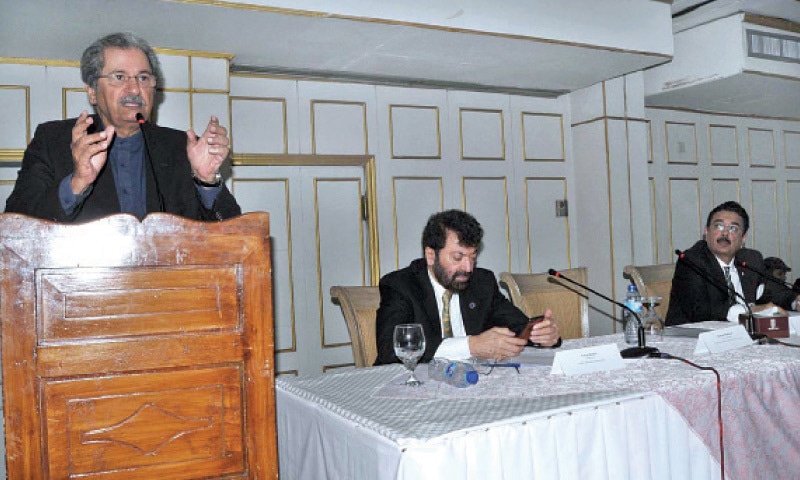

ISLAMABAD: Higher Education Commission (HEC) Chairman Dr Tariq Banuri on Friday emphasised the need to take urgent measures to prevent the spread of coronavirus (COVID-19) on campuses.
Speaking at the vice chancellors’ (VCs) committee meeting, Dr Banuri said the commission had issued its guidelines related to safety of students, adding that tangible measures were required to safeguard students and provide them with a safe and productive environment.
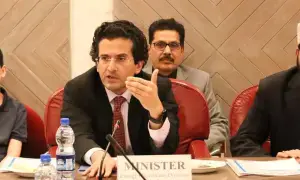
The meeting was presided over by VCs’ Committee Chairman Dr Mohammad Ali and attended by heads of all public and private universities, either in person or through video-conference. Education Minister Shafqat Mahmood also attended the meeting.
The VCs’ committee chairman said it was obligatory upon the university heads to sensitise students and create awareness about COVID-19. Pims Coordinator Prof Dr Naseem Akhtar shared a detailed presentation on preventive measures to deal with COVID-19 by creating awareness among faculty and students.
She said the virus spreads due to respiratory droplets released when a patient sneezes or coughs as well as through contact with the virus-infected patients and things. She said the symptoms of infection include cough, flu, fever and difficulty in breathing.
Calls for setting up committees to work on resolution of harassment complaints
Meanwhile, Dr Banuri brought to the notice of the meeting critical issues, like harassment on campuses, that have emerged in the higher education sector.
“We cannot allow any issue to pollute the learning environment at our universities. As educators, the responsibility lies upon all of us to provide a safe and productive environment to our students,” he said.
The HEC chairman stressed on the need for setting up committees to work on resolution of harassment complaints.
Mehergarh Executive Director Maleha Hussain briefed vice chancellors about the gravity of sexual harassment challenge.
Mehergarh is an NGO which has worked for the implementation of workplace harassment laws.
She said sexual harassment was considered a taboo in Pakistani society, which was why many cases were suppressed due to stigmas associated with it. The surge of harassment cases in universities is a matter of grave concern, she said, adding that lack of implementation of HEC’s anti-harassment policy had rendered the challenge more severe.
Meanwhile, an official of HEC told Dawn that to curb harassment cases on campuses and to facilitate universities in safeguarding and protecting students and other members of the universities, a committee of experts was being constituted to review international practices in this regard and prepare recommendations for establishing and strengthening an office of student services in universities.
He said this office would be responsible for protecting and safeguarding interest and rights of the students including standards related to health, medical attendance, safety, psychological counselling, career development and placements.
Earlier, during the meeting, the HEC chairman said Prime Minister Imran Khan was sympathetic to the situation created by financial constraints, adding that the commission had requested Rs20 billion to help ease the difficulty and the Finance Division had already approved Rs5 billion.
The meeting appreciated the government’s Rs5 billion grant for higher education institutions facing dire financial difficulties in the preceding months.
Earlier, speaking on the occasion, Education Minister Shafqat Mahmood said intensive measures were required to improve the quality of higher education so that graduates were skilled enough for employment.
He said there was a need to ensure that the faculty was qualified and the curriculum up-to-date.
The minister said the public and private sector universities were facing a number of issues, which needed to be addressed and the government is congnisant of these issues.
He said access of students to education was continuously improving, however quality should not be compromised. He urged the private universities to be mindful of maintaining quality while expanding their networks and establishing sub-campuses.
Mr Mahmood said different issues of universities faced delays at various levels due to lack of autonomy. “We want to enhance autonomy as much as we can,” he said, stressing the importance of accountability which needs to be ensured for autonomy.
The minister also said Ehsaas Undergraduate Scholarships were a game changer, and the government was committed to supporting students from low income families.
Published in Dawn, March 7th, 2020