Scholar discusses 19th century Muslim reformer Abduh

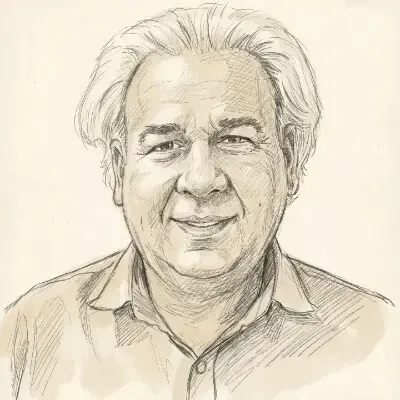
KARACHI: Dr Walid Ghali, an assistant professor at the Aga Khan University’s Institute for the Study of Muslim Civilisations (ISMC), gave a lecture on ‘Islam Reformist Tradition in the 19th Century Through Unknown Works of Muhammad Abduh (1849-1905)’ on Friday afternoon.
Dr Ghali started off by asking the audience about how many reformers they knew from the 19th century Muslim countries. Someone gave a few names to which he agreed and then claimed that there were roughly 75 Muslim scholars at that time between 1850 and 1950, covering the entire Muslim world.
It was because of the failures of society, the impact of European colonialism and the subsequent superpower conflict between the United States and Soviet Union. So in the late 19th and early 20th centuries the Islamic reformist movements appeared to bridge the gap between their Islamic heritage and modernity. The reformers included the likes of Jamaluddin Afghani, Muhammad Abduh and Syed Ahmed Khan and Mohammad Iqbal (the latter in South Asia).
Dr Ghali said the reformation movement in Egypt in the 19th century attempted to address modern problems by introducing modern answers drawn from the Quran. These ideas in particular were the significant contribution of Abduh who was generally considered in Egypt as a great scholar of Islam and pioneer of Egyptian renaissance. But there had been mixed views amongst Muslim scholars and in the West about him.
Muhammad Abduh is considered a pioneer of Egyptian renaissance
Dr Ghali before giving a detailed description of the scholar talked about the definition of ‘reform’. He said the first important point that needed to be kept in mind was that reform should not be confused with the Arabic word ‘islah’.
The second point was that there was no consensus among Muslims in the true meaning of reform in the Islamic context. There were so many definitions of reform in English language dictionaries. In the modern context of the Islamic world, it primarily referred to the writings of Muhammad Abduh and his disciple Muhammad Rashid Rida.
Dr Ghali said Abduh was born in 1849 to a small farmer in an Egyptian village. In 1862 he arrived at the first religious school in Tanta. He didn’t have any formal education except at madressahs. In 1866 at the age of 17 he went to Al Azhar, a step necessary for those who wished to acquire higher studies.
He was quick to comprehend the nature of memory-based aspects of traditional learning with its complete disregard for meaning. And he wasn’t allowed to ask questions. He quit the education for three months and went back to his village.
Dr Ghali said in 1872, something unusual happened with a group of students who met with Jamaluddin Afghani. This was a great turning point in his life. Through him he encountered the highly sophisticated Persian philosophy and European modern thought, as a result of which Abduh’s intellectual world became very different from that of his Al Azhar days.
From 1874 and 1876, he wrote two major works published after his death by Rashid Rida. It was argued that both works were influenced by Afghani. In 1877 after a battle with Al Azhar he received his graduation following which he entered the world of ulema. He taught at Al Azhar for two years until 1879 but then was removed from his position because of his relationship with Afghani who was active at that time against the British.
Abduh remained under house arrest in his village until early 1880. When he was permitted to come back to Cairo as an editor for an official newspaper, he wasn’t allowed to go back to teaching. In 1881 he became a member of the Supreme Council of Education. It had been more than 100 years since he passed away and there are many unanswered questions.
Dr Ghali said other than Afghani, his second influence was a revolution he participated in led by Ahmed Urabi in 1882. The British council persuaded its government that the revolt [in Egypt] had caused anarchy in the country. When riots broke out in Alexandria they convinced European troops to land there to destroy the revolution. Afghani and Abduh were exiled after that. Abduh returned from exile to a monarchy imposed by the British. There was a shift in his views regarding reform. His modernist project was to free religious thought from the shackles of taqleed (imitation).
Dr Ghali said Abduh was one of the first Arabic-speaking Muslims to experience the West first-hand. He spent time in France and other European countries. One part of his modernism was to prefer marriage of civilisations to a clash of civilisations. His approach to reform had three objectives: 1) he thought that the path to religious reform was to liberate Islamic thinking from imitation or taqleed; 2) the reform of Arabic literature and language; 3) and political reform by increasing the participation of people in the political life of their country.
After that Dr Ghali spoke about the discovered collection of manuscripts related to Abduh.
Published in Dawn, February 22nd, 2020