0
0

WHEN did the penning of critical reviews on Ghalib’s works begin? Just in case you were wondering, as February 15 marked Ghalib’s 151st death anniversary, his contemporaries did not think much of Ghalib. It was after his death that true appreciation of Ghalib’s works began.
Hakeem Agha Jan Aish’s famous four-line satirical qit’a ridiculing Ghalib’s poetry as ‘incomprehensible’ goes like this:
Agar apna kaha tum aap he samjhay tau kia samjhay
Maza kenhay ka jab hay ek kahay aur doosra samjhay
Kalam-i-Meer samjhay aur zaban-i-Meerza samjhay
Magar inka kaha yeh aap samjhein ya Khuda samjhay
Today few know about some of Ghalib’s contemporaries, such as Agha Jan Aish, who ridiculed him, but Ghalib lives on as one of the greatest poets of Urdu, if not the greatest. If we ignore such spoofs and also ignore critical pieces written in reply to Ghlaib’s criticism on Persian dictionary Burhan-i-Qaat’e, Hargopal Tafta founded the tradition of writing on Ghalib and it’s now been over 150 years.
Munshi Hargopal Tafta (1799/1800-1879) was one of Ghalib’s beloved disciples and Ghalib affectionately called him ‘Mirza Tafta’, though he was not ‘Mirza’ (Tafta was his takhallus or penname). The earliest critical writing on Ghalib was penned by him. It was Tafta’s commendatory preface to Urdu-i-Mu’alla that marked the formal beginning of critical writings on Ghalib. Urdu-i-Mu’alla was the second collection of Ghalib’s Urdu letters published on March 6, 1869, that is, just 19 days after Ghalib’s death.
After Tafta, some Persian books, such as Sham-i-Anjuman (1876) and Toor-i-Kaleem (1881) cursorily referred to Ghalib and his poetry. Aside from such early and sporadic critical opinions on Ghalib, some books, such as Ameer Meenai’s Intikhab-i-Yadgar (1879), Muhammad Hussain Azad’s Aab-i-Hayat (1880), Safeer Bilgiram’s Tazkira-i-Jalva-i-Khizr (1884) and Imdad Imam Asar’s Kashif-ul-Haqaaeq (also known as Baharistan-i-Sukhan) (1897) reviewed Ghalib’s works.
But the first book ever written on life and art of Mirza Asadullah Khan Ghalib was Yadgar-i-Ghalib. Penned by Altaf Hussain Hali, Ghalib’s disciple and a poet and critic in his own right, the book first appeared in 1897.
Other prominent critics who discussed Ghalib in their works in early 20th century include Mirza Hairat Dehlvi, Pyare Lal Shakir Meruthi, Abdul Majid Daryabadi and many others. But it was Abdur Rahman Bijnori’s adulatory preface to Divan-i-Ghalib, named Mahaasin-i-Kalam-i-Ghalib (1921), which is considered a milestone in critical works on Ghalib. Ever since then, every year some new books are added to the ever-increasing vast body of critical and literary works on Ghalib that include hundreds of books and thousands of articles and research papers.
Last year, as usual, we had a flow of new books on Ghalib. A couple of them were quite notable, such as Khalid Nadeem’s Aap Beeti Mirza Ghalib and Rasheed Hasan Khan’s Ganjeena-i-Ma’ani Ka Tilism. Both were introduced in these columns.
Of late, some more books on Ghalib have appeared and a brief intro is due:
As’haar-ul-Ghalib
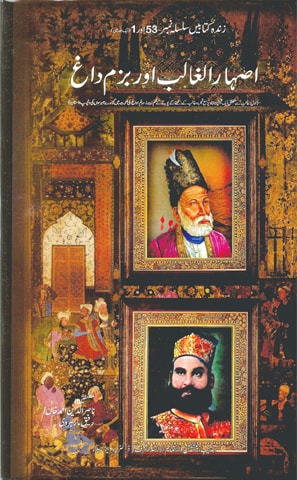
‘Sahar’ is an Arabic word and means, among other things, ‘relationship by marriage’. The plural is ‘as’haar’. So As’haar-ul-Ghalib means “the in-laws of Ghalib”. The book was written by Nasiruddin Khan, a descendent of Ghalib, and was first published in 1969. It gives details of Ghalib’s kith and kin and describes the lives of some of the elders of Ghalib’s in-laws, known as Nawabs of Loharu State. The book also includes a detailed family tree or recorded pedigree of Loharu family. Edited by Rashid Ashraf and published by Karachi’s Zinda Kitaben, the volume also includes Bazm-i-Daagh, a book on Daagh Dehlvi.
Majmoo’a-i-Nasr-i-Ghalib Urdu
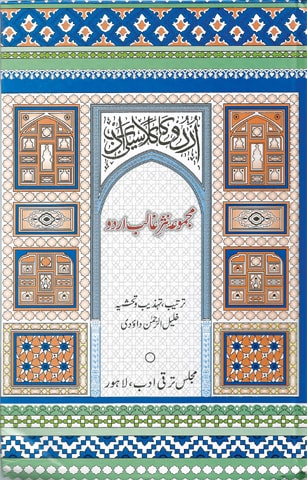
Khalil-ur-Rahman Dawoodi (1923-2002) was a renowned scholar and had collected a large number of Urdu, Arabic and Persian manuscripts as well as rare books. He had edited and annotated quite a few manuscripts and rare classical works. Among his remarkable works is Majmoo’a-i-Nasr-i-Ghalib Urdu that collects pieces of rare Urdu prose by Ghalib. Introduced and annotated by Dawoodi Sahib, the book was first published in 1967 and has since been out of print. So Lahore’s Majlis-i-Taraqqi-i-Adab has come up with a new edition of the book that includes some really rare pieces by Ghalib. It includes some prefaces and brief intros on different books as well as some personal notes written by Ghalib.
Ghalib: Tehqeeq-o-Tanqeed
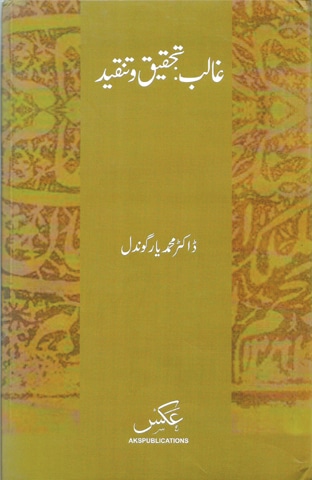
This book by Muhammad Yar Gondal is a collection of seven research papers, all discussing Ghalib in a way or the other. A very interesting paper included in the book recounts and analyses what was written against Ghalib right from his lifetime to the recent times. Quoting from different sources, the author has concluded that most of what was written against Ghalib had targeted Ghalib’s religious beliefs, his claims about his mentor (ustad) and his role in 1857 freedom war. Though in the final analysis the author has tried to defend Ghalib’s role in the war of freedom in a cursory manner, the book, published by Lahore’s Aks Publications, offers some important information on Ghalib and his life.
Published in Dawn, February 18th, 2020