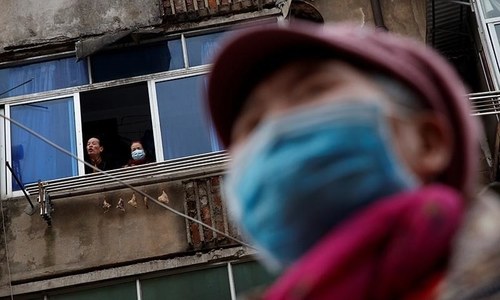
New coronavirus cases drop for third day as toll passes 1,600


The number of new cases from China's coronavirus epidemic dropped for a third consecutive day on Sunday, as the World Health Organisation chief warned it was "impossible" to predict how the outbreak would develop.
Global concern remains high about the spread of the virus, which first emerged in China's central Hubei province in December, with the first death outside Asia reported in France this weekend.
The death toll jumped to 1,665 in mainland China on Sunday after 142 more people died from the virus. More than 68,000 people have now been infected in China — but the number of new cases of the COVID-19 strain continued to decline.
In hardest-hit Hubei, the number of new cases slowed for a third consecutive day and at 139, the number of deaths was level with Saturday's toll.
The number of new cases in other parts of the country has dropped for twelve straight days.
The WHO chief Tedros Adhanom Ghebreyesus warned however that it was "impossible to predict which direction this epidemic will take".
"We ask all governments, companies, and news organisations to work with us to sound the appropriate level of alarm without fanning the flames of hysteria," he said, speaking at the Munich Security Conference.
"China has bought the world time. We don't know how much time."
The UN health body has asked China for more details on how diagnoses are being made.
An international team of WHO experts will arrive in Beijing this weekend for a joint mission with Chinese counterparts.
Quarantined cruise ship
The scale of the epidemic ballooned on Thursday after authorities in Hubei changed their criteria for counting cases, retroactively adding thousands of new patients to their tally.
Hubei added more than 14,000 cases in a single day after officials there started counting people clinically diagnosed through lung imaging, in addition to those with a positive lab test result.
Chinese authorities have placed some 56 million people in Hubei and its capital Wuhan under quarantine, virtually sealing off the province from the rest of the country in an unprecedented effort to contain the virus.
Local authorities around the country have introduced measures to try and stop the virus spreading.
Beijing's municipal government has enacted a rule requiring all people coming to the capital to quarantine themselves for 14 days, warning that violators would be punished, according to official media.
Outside mainland China, an 80-year-old Chinese tourist in France was the fourth person to die from the new coronavirus, with the other deaths in the Philippines, Hong Kong and Japan.
The biggest cluster outside China is on a quarantined cruise ship off Japan, with 355 infections now as dozens more cases were confirmed.
The US, Canada and Hong Kong said they will evacuate their own citizens from the ship, and quarantine them on home soil.
Several countries have banned arrivals from China and major airlines have cut services to the country.
Nepal became the latest country to bring its citizens out of Wuhan, with a plane carrying 175 Nepalis arriving in Kathmandu early Sunday.
Social stability
The virus spread last month as millions travelled across the country for the Lunar New Year holiday, which was extended to try and prevent more infections.
People have slowly started to return to work in the past two weeks, though many are doing their jobs from home and schools remain closed.
With the government facing criticism over its handling of the crisis, Chinese President Xi Jinping called for tighter policing to protect social stability.
The government must "increase use of police force and strengthen the visible use of police" during the crisis, Xi said in a February 3 speech published by state media on Saturday.
A number of local officials have been sacked for their role in mishandling the outbreak — including the province's top two health officials, and the political chiefs of Hubei and Wuhan who were replaced with Xi loyalists.
On Sunday, a host of new reprimands were made against officials in the virus-hit province, including the deputy governor of Qichun countywho "cut corners and worked around the centralised quarantine order," according to Hubei authorities.
Five other party officials from across Hubei were given warnings for offences such as not preventing mass gatherings in their areas.
China's central bank said it will also disinfect banknotes with ultraviolet light or high temperatures and store them for up to 14 days before they are put back into circulation.