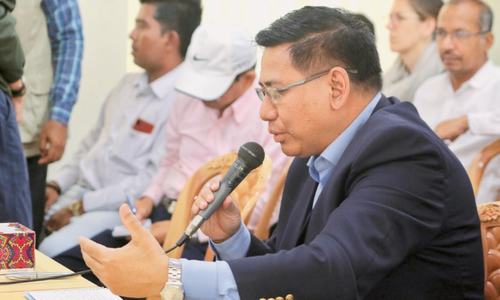
Myanmar govt-appointed panel finds 'war crimes' but no 'genocide' against Rohingya


A government-appointed panel established in Myanmar to probe allegations of abuses in Rakhine state in 2017 that drew global outrage, said on Monday they have found no evidence of genocide against the Rohingya Muslim minority.
More than 730,000 Rohingya fled Rakhine state during weeks of brutal violence, which the United Nations says gang rapes and mass killings were carried out with "genocidal intent". Hundreds of villages were burned to the ground and later razed and scraped.
Although the panel acknowledged "war crimes" had taken place, rights groups and Rohingya leaders dismissed the report as a "whitewash" days ahead of an expected ruling by the UN's highest court on a genocide case against the country.
The commission of inquiry said there were "reasonable grounds" to conclude members of the security forces among "multiple actors" were responsible for possible war crimes and serious human rights violations during a military-led crackdown against the group in 2017.
These included the "killing of innocent villagers and destruction of their homes", it said.
But in its statement, issued to mark the finalisation of a full report based on interviews with villagers and members of the security forces, the panel blamed Rohingya militants for attacking 30 police posts and "provoking" the crackdown and described the situation as "internal armed conflict".
"The Independent Commission of Enquiry (ICOE) has not found any evidence suggesting that these killings or acts of displacement were committed pursuant to an intent or plan to destroy the Muslim or any other community in northern Rakhine State," the panel's statement read.
"There is insufficient evidence to argue, much less conclude, that the crimes committed were undertaken with the intent to destroy, in whole or in part, a national, ethnical, racial or religious group, or with any other requisite mental state for the international crime of genocide."
Myanmar President Win Myint said in a statement on Tuesday the government "concurred" with the findings of the commission and vowed to pursue further investigations, specifically into alleged crimes by civilians and Rohingya militants.
He said, he had given the report to the army chief, so that the military might extend ongoing investigations, adding that the executive summary would be made public.
The army began a rare trial in November of soldiers and officers from a regiment deployed to Gu Dar Pyin village, the site of an alleged massacre of Rohingya.
Two spokesmen for the military could not be reached for comment by Reuters.
In Bangladesh, where hundreds of thousands of Rohingya who fled Myanmar have taken refuge, a Rohingya leader, Dil Mohammed, described the report as a whitewash.
"We have been persecuted for decades. So many of our people were killed, our women were raped, our children were thrown into fire and our homes were torched. If it is not genocide, what is it?" Mohammed said.
The International Court of Justice, the highest UN court, will this week issue a decision on a request for emergency measures in a genocide case against the country.
Gambia filed the suit in November alleging Myanmar was committing "an ongoing genocide" against the Rohingya.
The commission of enquiry was formed in 2018 as the country faced growing calls for accountability. The government had appointed two local and two international members to probe the violence against Rohingya — Filipino diplomat Rosario Manalo and Kenzo Oshima, a former Japanese ambassador to the UN.
Myanmar says the international efforts violate its sovereignty and has vowed to carry out its own investigations into the allegations.
But few have been punished so far. Seven soldiers jailed for 10 years for killing 10 Rohingya men and boys in the village of Inn Din were granted early release last November, after serving less than a year in prison.