Hell and ice water: glacier melt threatens Pakistan’s future


 0
0


SHISPER GLACIER: The villagers of Hassanabad live in constant fear.
Above them the vast Shisper glacier dominates the landscape: a river of jagged black ice moving towards them at as much as four metres per day.
Climate change is causing most glaciers worldwide to shrink, but due to a meteorological anomaly this is one of a few in the Karakoram mountain range that are surging.
This means hundreds of tonnes of ice and debris are pushing down the valley at ten times the normal rate or more, threatening the safety of the people and homes below.
“People’s lives, properties and animals are in danger,” warns villager Basir Ali.
UNDP estimates more than 3,000 glacial lakes have been formed in the region
Flash floods caused by glacial lakes, ice and rock falls, and a lack of clean and accessible water are all serious risks for those close to its path.
“When a glacial lake bursts there is an enormous amount of not only ice, water and debris that falls through, but also mud and this has devastating effects, it basically destroys everything that comes in its way,” said Ignacio Artaza of UNDP (United Nations Development Programme) Pakistan.
But repercussions of the Shisper glacier surge extend far beyond its path: the mighty Indus River is reliant on seasonal melt for more than half of its flow and changes in Pakistan’s ice fields affect this.
That has implications not just for those living in its basin, but for the whole nation, which relies on it for much of its food.
Shifting water levels also have implications for the fragile relationship between Pakistan and India.
Millions in danger
Sometimes called The Third Pole, the Karakoram region holds more ice than anywhere other than the Artic or Antartica.
But a third of the glaciers here are expected to melt by 2100, endangering the lives of hundreds of millions, according to this year’s Hindu Kush-Himalaya Assessment Report.
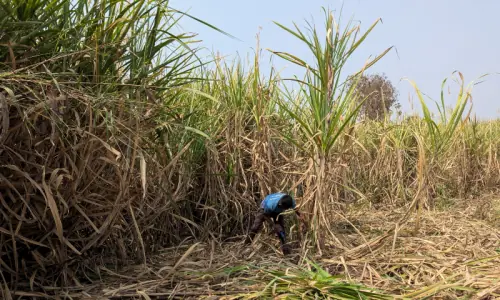
The waterway’s basin produces 90 per cent of Pakistan’s food, according to the UN, and agriculture is dependent on irrigation from the river, which heavily relies on meltwater from the ice sheets.
With its surging population experts warn the nation faces “absolute water scarcity” by 2025, with the loss of the Himalayan glaciers a key threat.
While scientists cite climate change and topography, it’s not clear exactly what causes the Karakoram anomaly where glaciers are surging and in some cases growing. But many say these changes will also impact the Indus because they alter meltwater patterns, causing flash flooding or water shortages that are difficult to predict and manage.
“The Shisper glacier is increasing its length and width, furthermore it is also moving downhill,” explained Shehzad Baig of the Gilgit-Baltistan Disaster Management Authority.
He warned climate change meant there was heavier snowfall during the winters and warmer temperatures in the summers, leading to the ice mass producing more meltwater, swelling the Hunza River, a churning mountain tributary of the Indus.
“This may cause harm to the local community and deprive the people of the Indus basin blocking or disturbing drinking water and irrigation channels,” Baig warned, adding that changing weather patterns were also creating more glacial lakes.
Water wars
The UNDP estimates that more than 3,000 glacial lakes have been formed in the region, with 33 posing an imminent threat of ‘outburst floods’, known as GLOFs, that could impact as many as seven million people.
Last year the surging Shisper glacier effectively dammed a meltwater stream from a neighbouring glacier creating a large lake. Authorities were forced to issue safety warnings to Hassanabad and local villages before the water was drained.
But satellite data shows the lake is already reforming, leaving residents fearing not only the progression of the crushing ice sheet but that they will be swept to their deaths in flash floods.
“This whole area will be devastated...the whole population and people’s properties will go into river,” cautions villager Didar Karim.
Professor Andreas Kb from the University of Oslo says Pakistan must adapt its “monitoring and response strategies, and risk management in general” to contend with both surging and shrinking glaciers.
Published in Dawn, January 11th, 2020