Council of Islamic Ideology terms certain sections of NAB law 'un-Islamic'


 26
26

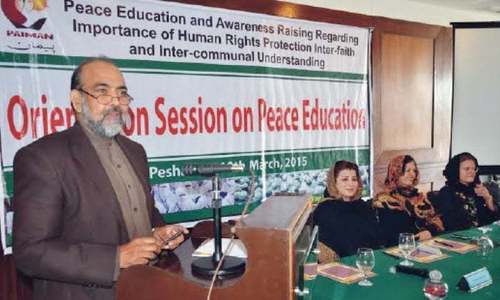
The Council of Islamic Ideology (CII) on Thursday termed some sections of the National Accountability Ordinance, 1999, as going against the Shariah.
Addressing a press conference on Thursday, chairman of the CII, Dr Qibla Ayaz, said the council held a two-day-long meeting during which it concluded that sections 14-D, 15-A and 26 of the NAO were un-Islamic.
Section 14 of the law pertains to presumption against accused accepting illegal gratification, Section 15 pertains to disqualification to contest elections (or to hold public office) and Section 26 pertains to the tender of pardon.
Ayaz said that according to the council, handcuffing suspects and airing footage of the arrest on media is un-Islamic. Additionally, the council said that it was not the suspects' responsibility to prove their guilt and keeping a suspect in custody for long periods without a case also went against Islamic principles.
As per the CII, plea bargains and turning of suspects into approvers is also against the Shariah.
Ayaz said with the National Accountability (Amendment) Ordinance, 2019, the accountability law will become further discriminatory.
"NAB law is not compatible with Islamic laws on crime and punishment," Dr Ayaz said, adding that the council will also review amendments to the law.
Last month, through a presidential ordinance, the Pakistan Tehreek-i-Insaf government made drastic changes in the country’s accountability law.
After smooth sailing of the three key bills on the tenure of the services chiefs through the parliament, the government and the opposition on Wednesday agreed to discuss and build consensus for legislation on other important matters including the powers of NAB.
As a first step to shun their differences causing delays in the legislation process, teams of the government and main opposition sat together yesterday for the first time in the chamber of National Assembly Speaker Asad Qaisar in the parliament house to forge consensus on five different bills including the National Accountability [second amendment] Ordinance, 2019.
In addition to discussing the NAB law, the CII during its two-day meeting, also presented its recommendations for the prevention of sexual violence against children. The CII suggested that a special court be formed to look at such incidents.
The CII also termed forced conversions as un-Islamic and unconstitutional.
Fawad questions CII's performance
Shortly after Dr Ayaz's press conference, Federal Minister for Science and Technology Fawad Chaudhry took to Twitter to express "serious concerns" about the CII's performance.
"Till today the religious segments [of the country] have not received any guidance from the ideological council," he said, adding that he could not understand the logic behind spending millions of rupees on such an institution.
In response to the federal minister's remarks, Dr Ayaz said Chaudhry's tweet was beyond his comprehension, adding that the government, Supreme Court and a high court had all expressed dissatisfaction with the NAB law.
"We have reviewed the NAB law from the perspective of the Shariah," he added.