Kohli latest to oppose four-day Test concept



GUWAHATI: India captain Virat Kohli does not endorse the idea of reducing Test matches to four-day affairs and on Saturday warned administrators against tinkering too much with the purest format of the game.
The International Cricket Council (ICC), the world governing body of the sport, is set to reflect on the idea of making Test matches four-day affairs to free up a crammed international calendar and reduce player workload.
The ICC’s plans to cut the length of Test matches from 2023 have divided players and nations.
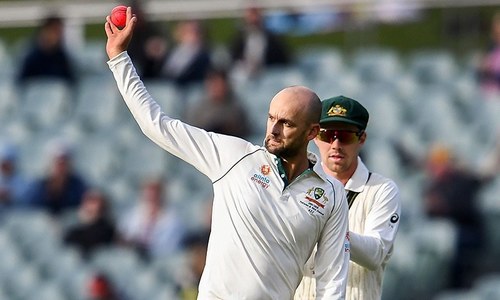
Australia have said they will seriously consider the concept, while England will back making it mandatory from 2023. The cash-rich Indian board (BCCI) is yet to declare their stance on the matter. Australia Test captain Tim Paine has been joined by his team-mates Travis Head and Nathan Lyon in criticising the idea.
“I am not a fan,” Kohli told reporters in Guwahati on the eve of the first of the three Twenty20 Internationals against Sri Lanka. “I think the intent will not be right then because then you will speak of three-day Tests, I mean where do you end? Then you will speak of Test cricket disappearing. I don’t endorse that at all.
“I don’t think that’s fair to the purest format of the game. How cricket started initially and five-day Test matches was the highest of Tests you can have at the international level. According to me, it shouldn’t be altered.”
Four-day matches were given the green light by the ICC in 2017, when South Africa hosted one against Zimbabwe, while England played a four-day Test against Ireland last July.
With an increasing number of test matches ending prematurely, the administrators are keen to free up more space in the schedules for lucrative shorter-form matches.
The Federation of International Cricketers’ Associations fears the new gaps in the calendar could well be filled with more cricket. In November, India became the latest major cricket playing nation to embrace day-night Tests when the Eden Gardens in Kolkata hosted Bangladesh.
Kohli, one of the best batsmen of his generation, feels innovations in the longest format should end at pink-ball Test matches.
“I was asked about the 100-ball [in England], I said I’m not going to try myself in another format because there’s already so much going on,” he added. “Day-night cricket is the most that needs to be changed about Test cricket, according to me. I mean then you’re purely going to be talking about getting the numbers in and entertainment.
“Day-night is another step towards commercializing Test cricket and creating excitement around it but it can’t be tinkered with too much.”
Day-night Test were also initially resisted by players, but have become gradually accepted.
The ICC allowed four-day Tests in 2017 and they have been tried in one-off games between South Africa and Zimbabwe and England against Ireland.
But they are not allowed in the World Test Championship which is led by Kohli’s India.
The English, Australian and New Zealand national associations have indicated they are ready to change. Some players like England captain Joe Root have also said the plan should be considered.
But the key Board of Control for Cricket in India has not yet made a comment. And several leading players have joined Kohli in coming out against the change.
The ICC and national boards in favour of change say that cutting Test time is a way to ease a calendar now packed with Tests, 50-over internationals and the growing number of T20 internationals and leagues.
Published in Dawn, January 5th, 2020