Bangladesh shuts down telecom services along India border amid 'security concerns'


 31
31

Bangladesh's telecom regulator has ordered operators to shut down services along the border with India citing security reasons, authorities said in a statement.
Mobile network coverage has been suspended for one kilometre along the entire border with India until further notice “for the sake of the country's security in the current circumstances”, officials said in the statement, which was released on Monday.
One official on the condition of anonymity said the decision was taken out of concern that Indian Muslims might seek to enter Bangladesh after India introduced a new citizenship law which has triggered violent protests across India.
Read more: Explainer: What does India's new citizenship law mean?
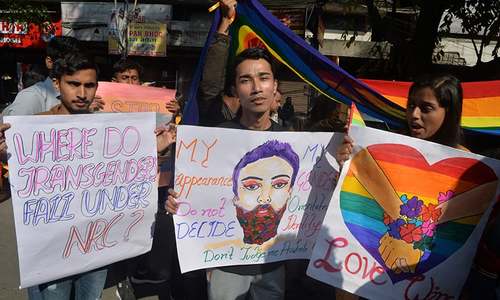
On Dec 11, India's parliament passed a contentious bill that seeks to grant citizenship to non-Muslim immigrants from some countries.
The bill will let the Indian government grant citizenship to millions of illegal immigrants who entered India from Pakistan, Afghanistan and Bangladesh before 2015 — but not if they are Muslim.
Many Muslims in India say they have been made to feel like second-class citizens since Modi stormed to power in 2014.
Several cities perceived to have Islamic sounding names have been renamed, while some school textbooks have been altered to downplay Muslims' contributions to India.
In August, Modi's administration rescinded the partial autonomy of Muslim-majority occupied Kashmir and split it into two.
A citizens' register in Assam finalised this year left 1.9 million people, many of them Muslims, facing possible statelessness, detention camps and even deportation. Modi's government has said it intends to replicate the register nationwide with the aim of removing all “infiltrators” by 2024.
Besides stoking concern among Muslims, the proposed changes have also led to demonstrations in the northeastern states where residents are unhappy about an influx of Hindus from neighbouring Bangladesh who stand to gain citizenship under the Citizenship Amendment Bill.