A 4th grader explores the love of reading through children's literature
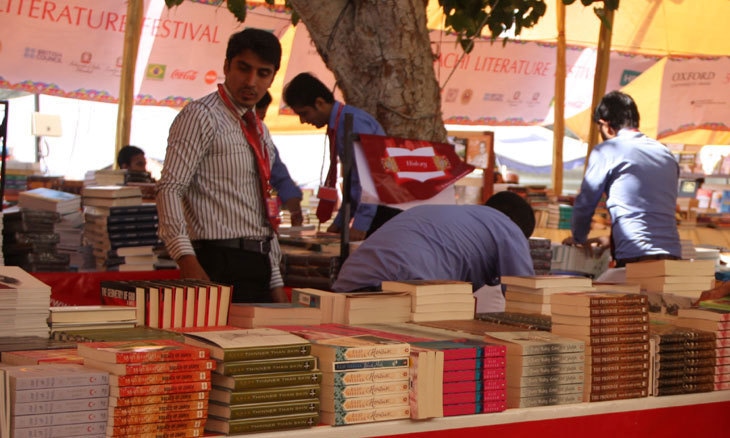


I didn’t read a whole lot when I was living in Pakistan. There were very few books I was interested in. There were a lot of books in my school library, but they were only used for teaching English. You couldn’t read them for fun. My parents didn’t encourage me to read either because I would get way too much homework. Every day I would spend more than an hour on homework, and I was only in first grade.
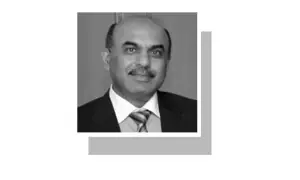
But I do remember meeting Mr Musharraf Ali Farooqi when I was 5 years old. Mr Farooqi is a writer, translator and publisher. He also writes books for children. I remember he gave me a few of his own books to read. I really liked reading The Amazing Moustache of Moochandar, and even asked my dad to wear a big moustache like Moochandar. I didn’t have any books to read apart from the ones Mr Farooqi gave me.
Later on in August 17 I moved to upstate New York because my dad had to come here to do his PhD at Binghamton University. A few months later, my mom started working at the nearby Vestal Public Library. Every time my dad and I went to drop my mom off at the library I would go and check out the books there.
The more you read, the more you know
The library had a huge kids’ section with lots of books. There were graphic novels, folktales, history books, biographies, fantasy and science fiction. I really liked reading graphic novels and illustrated books. Sometimes, I would also read biographies and history books and within a few months, I had read all the graphic novels in the kids’ section of the Vestal Public Library.
One day I saw one of my classmates reading a Geronimo Stilton storybook. He said it was funny, so I decided to check it out. I read a couple of Geronimo Stilton books that were on our classroom’s bookshelf. I was hooked to Geronimo Stilton’s cheesy puns (pun intended). Geronimo Stilton is a character created by the Italian author, Elisabetta Dami. He is a mouse journalist and editor of The Rodents Gazette and he lives in the New Mouse City.
There are more than one hundred books in the Geronimo Stilton series and it's very popular among kids. When I told my dad about the Geronimo Stilton books, he took me to another library, the Endicott Public Library. This library had almost all the books in the Geronimo Stilton series. I started checking out these books and now I have read more than ninety books from this series.
I have also read other popular series like Big Nate, Diary of a Wimpy Kid, and Captain Underpants. My dad told me that he used to read the Big Nate comic strip that was published in Dawn newspaper. I really enjoyed reading these books because they were funny and relatable. I really liked the wordplay in these books.
Libraries fuel the imagination
Then my dad took me to another library, the Broome County Public Library. This library was bigger than the Endicott and Vestal libraries combined. The kids’ books collection there was also bigger and much better. You could get as many books checked out as you wanted from these libraries and that too free of cost because these are public libraries. Sometimes I check out twenty books at a time.
I had always wondered how librarians acquired books for kids. So, I decided to go ask one of the librarians in the kids’ section. The librarian told me that the New York state is divided into different library systems.
The three libraries — Vestal, Endicott, and Broome — were part of the Four County Library System that has forty-two public libraries. The main office of the Four County Library System is in Vestal and all forty-two libraries order books through the main office.
I asked the librarian how they get to know which kids’ books they should acquire. The librarian told me that for kids’ books there were four librarians with master’s degrees in library science. These librarians had been trained to develop book collections for kids and because of their training and knowledge, they knew how to pick books for kids of different ages.
The librarian also told me that they took suggestions from kids too. Another librarian told me that they read book reviews in journals like the School Library Journal before acquiring a specific book.
The Endicott Public Library also has something called Playaways. These are audiobooks that can fit in your pocket. All you need is a pair of headphones and an AAA battery to listen to a Playaway. I listen to Playaways when I am drawing or when we are going on a road trip. But the library also has regular audiobooks that can be played through a CD player. Then there are also movies on DVDs for kids to borrow.
Sometimes, my parents also read books that I check out from these libraries because adult books are boring. My mom read a book about the Second World War that I had brought from the Broome County Library.
My dad read the first book of the Diary of a Wimpy Kid series when I told him that it was hilarious. He really liked it and said that he used to be just like Greg Heffley, the main character in Diary of a Wimpy Kid. He got so inspired by reading it that he wrote me a story called “Pranking My Dad.” The story was about a character named Hamadan who pulled a prank on his dad.
Reading begins at home
Both my parents are academics which means that they get paid to read and write. So, I asked my parents what kind of books they read when they were my age. My mom said that she didn’t read a whole lot when she was my age. She started reading kids’ magazines in Urdu when she was about 13 years old. She told me that there weren’t any public libraries around when she was growing up in Karachi. The first time she visited a library was when she was in college. And her college library would not let students to check books out of the library.
My dad said he did not read anything when he was little. He said his school had a library but most of the books in the library remained locked in cabinets. Why did his school even have a library when they didn’t let students check books out?
Teachers in our school also encourage us to read books on our own. And since there is very little homework, I get enough time to read books that I like. Mostly, my homework consists of two sheets of math problems and 20 minutes of reading. Our teachers do not tell us which books to read, which means that we can read books that we like. Usually, I pick books depending on their genre, length, and the quality of illustrations.
During the Black History Month, I read about Dr Martin Luther King Jr., Thurgood Marshall, Abraham Lincoln, and Alexander Hamilton in school. I got interested in Black History and decided to check out a few books from the local public library. I read a book about Fredrick Douglass and how he escaped slavery by posing as a free sailor.
I wanted to read about Pakistani activists like Dr Martin Luther King Jr. I asked my dad if he could get me any books on Pakistani activists. He said that there were very few books on the lives of Pakistani activists and most of these books were for adults. But I did get a book about Malala Yousafzai from the Vestal Public library.
Creating space for children's literature
But where do these public libraries buy books from? According to the website of IBIS world, the total revenue of the children’s book publishing industry in America is $2 billion in 2019. There are 149 children’s book publishing businesses in America.
Unfortunately, in Pakistan, there is no children’s literature industry which is very sad because this means that there are not enough books for Pakistani kids who want to read.
I asked Mr Farooqi why there is no children’s literature industry in Pakistan. According to Mr Farooqi, there are very few publishers, maybe only five, whose focus is children’s literature. These publishers usually keep publishing the same books over and over because they can’t afford to publish new books. He also said that some publishers supply badly written and poorly illustrated books at a small cost to school libraries.
I agree with Mr Farooqi especially about the quality of illustrations. I have an Urdu storybook that my parents bought from Pakistan. In the story, there are two friends sitting on a swing on a tree, but the illustration is that of a metal swing. Mr Farooqi said that since a lot of children in Pakistan do not have access to good storybooks, they don’t end up developing reading habits early on.
To develop a children’s book industry in Pakistan, we need writers and illustrators who can write interesting stories for kids. We also need to ask children what kinds of books they would like to read.
I think children should be allowed to pick books of their own choice rather than telling them which books to read. If we do not build public libraries and a children’s book industry a lot of Pakistani kids will remain deprived of this joy. Do we want that to happen?
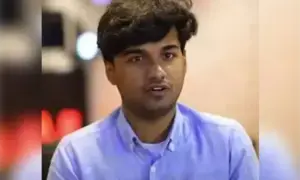
Hamadan Bilal is a 4th grader at Clayton Avenue Elementary School in Vestal, New York. He likes playing video games and is part of the Vestal Area Swim Team.