UK suspends agreement with Pakistan for exchange of prisoners


 7
7


ISLAMABAD: The UK government has suspended an agreement with Pakistan for exchange of convicted prisoners because of lenient application of law and punishment handed down to drug smugglers in Pakistan, a parliamentary committee was informed on Wednesday.
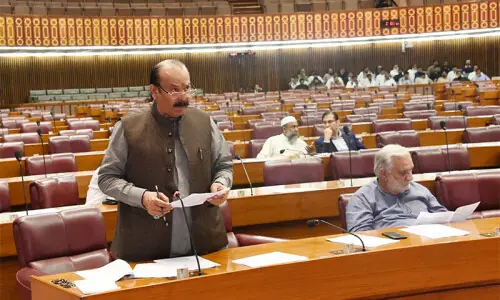
“On the other hand, China is reluctant and most likely will not enter into Transfer of Offenders Agreement (TOA) with Pakistan because of similar reasons,” the Director General of Overseas Pakistanis Division, Ministry of Foreign Affairs, Shozab Abbas, told the National Assembly’s Subcommittee on Overseas Pakistanis and Human Resource Development.
“The UK government does not want to continue the exchange of prisoners’ agreement with Pakistan. The reason for this is that the UK government wants drug traffickers convicted in Britain and serving their sentences there, to continue serving their sentences in Pakistani jails after their transfer and their sentences should not be set aside by Pakistan. The British government will consider restoring the agreement only if Pakistan government applies the same punishment handed down to convicts in the UK,” Shozab Abbas said.
He recalled a case from April 2018, when 17 Pakistani convicts were repatriated from Thailand.
“In an intelligent move, these drug smugglers convicted in Thailand, had sought reduction in their punishment by invoking the Pakistani law after being repatriated under the TOA. The Supreme Court ordered releasing eight of them,” Mr Abbas told the committee.
Under the Thai law, a drug convict spends 40 years in jail. In Pakistan, depending on the quantity, the punishment for traffickers of narcotics varied from 10 years to maximum 25 years, the committee meeting was told.
Of the 88 Pakistanis jailed in Thailand last year, nearly 60 were convicted for drug-related offences. As many as 48 prisoners qualified for repatriation to jails in Pakistan. Pakistan paid $35,000 to bring back 17 convicts in the first phase.
Mr Abbas informed the committee that he had proposed to the interior ministry that prisoners should serve the term of punishment handed down to them by the transferring states.
Published in Dawn, November 21st, 2019