SANTIAGO: Chile said on Friday it will hold a referendum to replace the country’s dictatorship-era constitution — a key demand of protesters after nearly a month of violent civil unrest.
The announcement sent the stock market soaring over 6.0 percent and sparked a recovery by the peso.
Lawmakers in Chile’s National Congress agreed to hold the plebiscite in April 2020 after hours of intense negotiations between the governing coalition and opposition parties.
The current charter, in force since 1980 and enacted by the former military junta of Augusto Pinochet, has been changed numerous times in the years since.
But it does not establish the state’s responsibility to provide education and healthcare — two demands made by the millions of Chileans who have taken to the streets.
“This agreement is a first step, but it is a historic and fundamental first step to start building our new social pact, and in this the citizenry will have a leading role,” said Interior Minister Gonzalo Blumel.
The referendum will ask voters whether the constitution should be replaced and if so, how a new charter should be drafted, Senate president Jaime Quintana said.
“It is a political response in the most noble sense of the term, the policy that thinks of Chile, which is taking its destiny in hand and which is assuming its responsibilities,” said Quintana, from the center-left opposition.
The Santiago Stock Exchange rose more than 6 percent on the news.
The main S&P ISPA index rose 6.19 percent and the peso recovered from record losses to trade 13.10 pesos against the dollar at 789.53.
“We are happy to have reached an agreement that marks a victory against violence,” said Jacqueline van Rysselberghe, head of the Independent Democratic Union party, a pillar of Pinera’s coalition. Danilo Carrasco, 50, a security guard, was more cautious.
“We have to wait and see if this referendum soothes the street, but I hope that something good will come out of it,” he said.
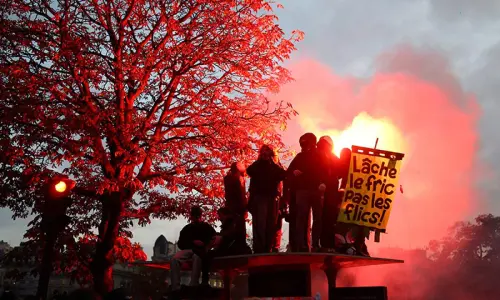
The unrest that began on October 18 with protests against a rise in rush-hour metro fares has mushroomed into a broader outcry against the status quo, with burning, looting and daily confrontations between demonstrators and police.
The crisis is Chile’s biggest since its return to democracy in 1990, leaving 20 dead — five at the hands of state forces — and more than 1,000 injured.
Demonstrators have demanded greater social reform from the government led by President Sebastian Pinera, who has announced several measures in a bid to assuage public anger.
After weeks of sometimes violent demonstrations, most polls show the protest movement is supported by 75 percent of Chileans.
Even more — 87 percent, according to a survey by pollster Cadem published this month — say they favor the protesters’ demand for constitutional reforms.
Approved in 1980, Chile’s junta-era constitution preserved some powers of the military and established an electoral system that long favored the political right-wing.
Published in Dawn, November 16th, 2019