UK court denies Pakistan claim to £35m in Nizam case



THE UK High Court on Wednesday ruled on a drawn-out battle for funds amounting to £35 million by issuing a judgement in favour of the Nizam of Hyderabad and against Pakistan, who had claimed the funds that have been lying untouched in a London bank account for 70 years.
Read: British court accepts Pakistan’s claim over Nizam’s funds
In a lengthy judgement that covers the developments of seven decades, the Royal Courts of Justice in London noted: “Nizam VII was beneficially entitled to the fund and those claiming in right of Nizam VII — the Princes and India — are entitled to have the sum paid out to their order.”
The judgement, handed down by Justice Marcus Smithcourt, also said: “Pakistan’s contentions of non-justiciability by reason of the foreign act of state doctrine and non-enforceability on grounds of illegality both fail.”

The claim started out years ago as a three-way battle for funds claimed by Pakistan, India and the offspring of the 7th Nizam of Hyderabad. On Wednesday, it culminated in defeat for Pakistan as the court ruled in favour of the Nizam’s descendants — Prince Mukarram Jah, the titular eighth Nizam of Hyderabad, and his younger brother Muffakham Jah. Last year, the two princes joined hands with the Indian government in the legal battle against the government of Pakistan over the funds sitting in a Natwest account here.
High court rules in favour of Nizam of Hyderabad; princes reach compromise with India
The background
The case dates back to 1948, when funds of just over £1m were deposited by the state of Hyderabad into the London bank account of the-then Pakistan High Commissioner, Habib Ibrahim Rahimtoola. The transfer was made as Indian troops began their annexation of Hyderabad immediately after the death of Quaid-i-Azam Mohammad Ali Jinnah. Today, the interest accumulated on the funds means the original £1m deposit has turned into over £35m.
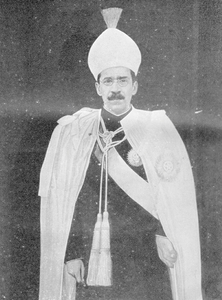
The transfer was made by Hyderabad’s then finance minister Nawab Moin Nawaz Jung and his representative in London, Mir Ali. But a week after the transfer, by which time Hyderabad was under Indian control, the 7th Nizam, Osman Ali Khan, said the payment had been unauthorised and Pakistan had no right to the money. During his lifetime, Osman Ali Khan was often described as the richest man in the world and since his death in 1967, his descendants have fought many battles for shares of his wealth.
Initially, the dispute was between the ruler of Hyderabad, i.e. the 7th Nizam of Hyderabad, and Pakistan. That dispute resulted in proceedings that commenced in the Chancery Division of the High Court of Justice.
The claim was brought by Nizam VII and Hyderabad as plaintiffs against Mr Moin, the bank and Mr Rahimtoola as defendants. Early in the course of the 1954 proceedings, Pakistan asserted sovereign immunity — a legal doctrine by which a state cannot commit a legal wrong and is immune from civil suit or criminal prosecution.
Pakistan’s objection to the 1954 proceedings and assertion of sovereign immunity went all the way to the House of Lords. By order of the House of Lords, the 1954 proceedings were stayed against the bank, and set aside against Mr Rahimtoola, on grounds of Pakistan’s successful assertion of sovereign immunity. The British bank that held the funds said it would hold onto them until it was established who it belonged to.
In 2013, Pakistan commenced the present proceedings against the bank for payment of the fund. The government of Pakistan asserted a beneficial interest in the fund and waived its sovereign immunity to go up against the other claimants, i.e. the two princes and India. The Indian government argued that since it is the successor state to Hyderabad, it should get the money.
Last year, however, the princes and India reached a settlement in they agreed between themselves how the fund would be divided should the court resolve the question of beneficial interest.
The question before the court was whether it is Pakistan or the late Nizam VII who was, in 1948, entitled to the fund.
Pakistan’s position
To bolster its case, the Pakistan government engaged two researchers who reviewed British government archives for the period from 1947 onwards. They found documents showing that, fearing an Indian invasion of Hyderabad, the 7th Nizam had asked Mr Jinnah to provide an airlift of weapons from Karachi to Hyderabad. A British pilot, Frederick Sidney Cotton, made at least 35 trips to the state.
On this basis, Pakistan argued that Hyderabad transferred the money to the Rahimtoola account in order to compensate, reimburse, and indemnify Pakistan in connection with assistance provided to Nizam VII and to place the funds in the hands of Pakistan, a friendly state which had assisted Hyderabad, and keep the money out of the hands of India.
The government maintained that Pakistan assisted Hyderabad and the 7th Nizam by procuring and facilitating the supply and transportation of weapons via Pakistan to Hyderabad, in support of Hyderabad’s attempts at self-defence against Indian aggression.
Pakistan’s primary case was that all aspects of this dispute were non-justiciable, save for the banker-customer relationship between the bank and Pakistan, which was justiciable. Pakistan’s alternative case was that all aspects of this dispute were non-justiciable.
The court, however, denied Pakistan’s arguments on Wednesday when it ruled that the fund was held by Pakistan through the High Commissioner in the United Kingdom on trust for Nizam VII and not by Mr Rahimtoola personally. It also said Pakistan or Mr Rahimtoola did not have any beneficial interest in the fund.
Government’s reaction
In a statement released after the judgement, the Foreign Office said: “Pakistan has taken note of the judgment by the High Courts of Justice of the UK in the Hyderabad Fund Case, today, after a two weeks trial in June 2019. The judgment rejects the longstanding claims of the two major parties and upholds the claims of the heirs of Nizam of Hyderabad.”
It added that the government of Pakistan is closely examining all aspects of the detailed judgement and will take further action in light of legal advice received.
Published in Dawn, October 3rd, 2019