India defends right to buy Russian arms on US trip

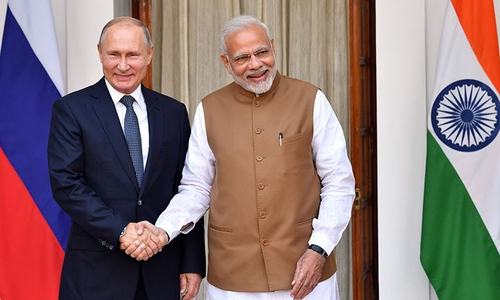
India's foreign minister on Monday defended his country's right to buy a missile defence system from Russia despite the threat of sanctions from the United States.
On a visit to Washington, Foreign Minister S Jaishankar said India was discussing the US concerns but declined to forecast the ultimate decision on the fate of the S-400 purchase from Russia.
"We have always maintained that what we buy — the sourcing of military equipment — is very much a sovereign right," he told reporters ahead of a meeting with Secretary of State Mike Pompeo.
"We would not like any state to tell us what to buy or not to buy from Russia any more than we would like any state to tell us to buy or not buy from America," he said.
"That freedom of choice is ours and we think it's in everybody's interest to recognise that," he said.
India, a Cold War ally of the Soviet Union, last year agreed to buy five S-400 systems for $5.2 billion, and Russia has said that delivery is on track.
Read: Russia, India sign $5bn deal for S-400 air defence system
Under a 2017 law, the United States imposes sanctions against countries over "major" arms purchases from Russia due to Moscow's military involvement in Ukraine and Syria and alleged meddling in US elections.
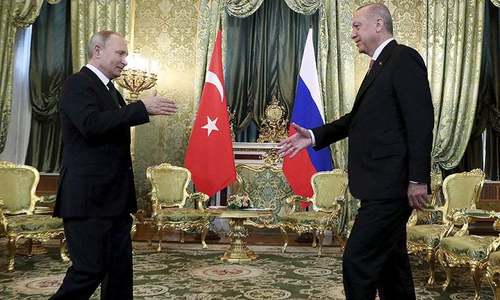
Turkey, a Nato ally, in June angered the United States by also going ahead with an S-400 purchase.
Read: Turkey ignores US warnings over Russian S-400 missile deployment
President Donald Trump responded by ending Turkey's involvement in the F-35 fighter jet program but has yet to announce other sanctions.
Jaishankar hailed warm relations overall with the United States but underlined India's differences with Trump's hawkish stance on Iran.
The United States has threatened sanctions to force all countries to stop buying oil from Iran as it seeks to curb the clerical regime's influence in the Middle East.
In May, the Trump administration ended waivers for countries including India, formerly a leading customer for Iranian oil.
"We view Iran from the east, and from the east Iran has been a very stable, status quo power," Jaishankar said.
For India, "we've been repeatedly assured that the affordable and predictable access to energy will not change," he said, declining to comment further on discussions on Iran.
India has been teaming up to expand Iran's Chabahar port, a way to ensure a supply route to Afghanistan that bypasses Pakistan.