Barricades and books: life in a Srinagar neighbourhood


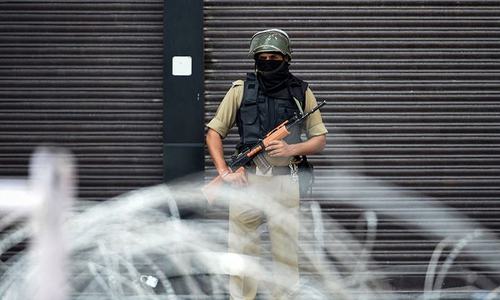
SRINAGAR: Few people step outside Anchar, a neighbourhood ringed by steel barricades and razor wire in occupied Kashmir, where police have imposed a weeks-long clampdown to stifle protests.
The densely-populated, working class area in Srinagar is a pocket of resistance to India’s removal last month of special status for Jammu and Kashmir.
Read more: 'Impassioned, forceful': Twitterati unanimous in praise for PM Imran's remarks on Kashmir at UNGA
While some normality has returned more than seven weeks after the crackdown began, there is little sign of an end to the standoff in Anchar, home to about 15,000 people. Entrances to the area are guarded by young people manning barricades made of tree trunks, electricity poles and barbed wire to keep the police out.
Laneways have been dug up to block security vehicles.
As night falls, groups of youths, many wearing masks and armed with stones and tree branches, are huddled around bonfires, sipping tea provided by neighbours.
“I am spending the night outdoors so I can protect my family and not let Indians, who have been committing atrocities on us, enter,” said Fazil, a 16-year-old student.
“There is no fear in me,” he added, holding a thick tree branch as he watched the street from a checkpoint.
Indian authorities have arrested nearly 4,000 people in occupied Kashmir since the decision provoked outrage and inflamed tensions with Pakistan.
India cut internet and mobile services and imposed curfew-like restrictions to prevent protests. More than seven weeks later, some normality has returned to the disputed region and many of those detained have since been freed. Telephone landlines are working again, though mobile and internet networks remain suspended.
However, Anchar remains a no-go zone for Indian forces, and government services like schools are still shut in the area, prompting residents to come up with workarounds.
Four college students have set up a makeshift school in a three-room house to give lessons to 200 children every day. They keep streaming in, the girls with their heads covered, books in hand from nursery rhymes to mathematics.
“The education of students in this locality is suffering because of the turmoil. We won’t let our future generations suffer,” said Adil, a college student turned teacher.
Another student teacher, Walid, said: “These children only see bullets and pellets every day.”
Other students are providing basic medical care so people need not go into other areas of the city for fear of arrest.
Rubina said her 15-year-old son was injured by pellets fired by Indian forces while he was returning home from Friday prayers. The boy’s head is heavily bandaged and he hasn’t spoken since the incident, but the family would rather treat him at home than take him to a city hospital, fearing he would be detained by police.
“If he has to go out for a change of bandage to the nearby government hospital, he will be accompanied by six or seven women, so they don’t snatch him away,” Rubina said.
Published in Dawn, September 28th, 2019