RAWALPINDI: A woman died of dengue fever at Benazir Bhutto Hospital (BBH) on Wednesday.
Amna Sharif, 26, was a resident of Gulraiz II. She died in the evening in the hospital’s intensive care unit, doctors said.
A source said she was diagnosed with dengue a few days ago and was admitted to BBH.
A senior doctor confirmed Sharif’s death and said that a total of 292 suspected dengue patients had visited the hospital, of which 128 tested positive for dengue.
He added that 28 people tested negative for dengue and the results of the other 86 were awaited.
Punjab Chief Minister Sardar Usman Buzdar on Wednesday also approved the distribution of anti-dengue kits among the public at their doors. These kits will first be distributed among people living in the ‘red zone’, and the scope of distribution will be extended to other areas if required.
Mr Buzdar has directed for the kits to be distributed quickly, and said that medicines for dengue treatment are available at hospitals.
The primary and secondary health department have begun working on preparing anti-dengue kits.
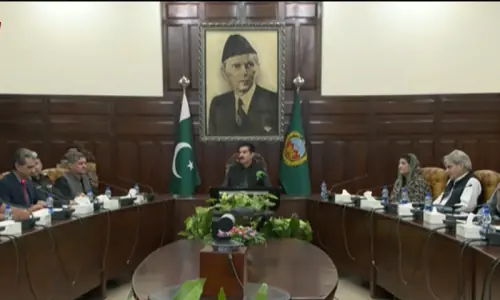
Also on Wednesday, Punjab Chief Secretary Yousaf Naseem Khokhar reviewed the anti-dengue drive in Rawalpindi and directed the Punjab Healthcare Commission to ensure reporting of dengue cases from private hospitals and laboratories.
Mr Khokhar said the increase in the number of patients in Rawalpindi and Lahore is a matter of concern, and work would have to be done on an emergent basis to overcome the situation.
Secretary Primary Health retired Capt Mohammad Usman told the meeting that 2,751 dengue cases have been confirmed in Punjab so far. He said private hospitals and laboratories are not reporting dengue cases, which is aggravating the situation.
He said that in view of the emergency in Rawalpindi, a 350-bed private hospital in Rawat has been arranged to manage patients, and trained health department doctors and nurses have been deputed there.
Punjab Registrar Cooperatives Dr Faisal Zahoor visited the Gulshan-i-Abad Cooperative Housing Society in Rawalpindi and inspected dengue control measures adopted by the housing society’s administration.
Dr Zahoor said cooperative officers are supervising the anti-dengue campaign in their respective areas alongside the housing societies’ executive committees.
He also visited the housing society’s graveyard and directed that vegetation and wild growth be removed regularly to prevent dengue larvae breeding spots. He said leaking water supply lines must be repaired and the sanitation system managed to prevent larvae from flourishing.
Published in Dawn, September 26th, 2019