UN atomic watchdog says it has evidence Iran is installing centrifuges



BERLIN: The United Nations’ atomic watchdog confirmed on Monday that Iran is preparing to use more advanced centrifuges, another breach of limits set in the country’s slowly unravelling nuclear deal with major powers.
Iran had already announced the step, its latest violation of the 2015 agreement as it tries to pressure European signatories to find a way to maintain oil shipments and ease the toll of US sanctions on the Iranian economy.
The International Atomic Energy Agency reported its inspectors verified the installation of new centrifuges. The agency said all had been “prepared for testing” but none yet tested at the time of the Sept. 7-8 inspection.
The nuclear deal was meant to keep Tehran from building atomic weapons something Iran denies it wants to do in exchange for economic incentives. Its collapse started with the United States unilaterally withdrawing from the deal last year and imposing increased sanctions.
The other signatories Britain, France, Germany, China and Russia, as well as the European Union have been struggling to salvage the agreement and find a way to meet Tehran’s demands.
To put pressure on them, Iran has already pushed past limits in the deal, called the Joint Comprehensive Plan of Action, or JCPOA, on nuclear enrichment purity and stockpiles of enriched uranium.
A centrifuge is a device that enriches uranium by rapidly spinning uranium hexafluoride gas. The IAEA said the ones its inspectors saw included 30 advanced IR-6 and three IR-6s models, as well as multiple IR-4 and IR-5 models.
Under the atomic accord, Iran has been limited to operating 5,060 older-model IR-1 centrifuges.
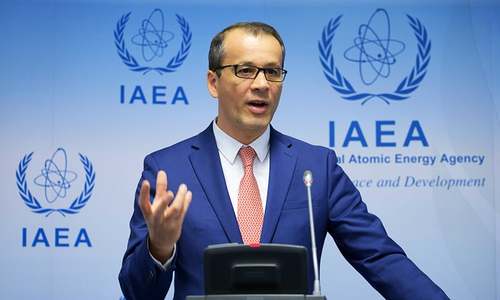
Asked what the new centrifuges could mean to enhance Iran’s ability to enrich uranium, IAEA Acting Director General Cornel Feruta said “output is not a simple matter” but also it was “not for the agency to judge what these actions will bring.” “We have made it very clear that the role of the agency is to report the facts to members of the JCPOA and also the board,” Feruta told reporters in Vienna.
Russia’s permanent representative to international organisations in Vienna, Mikhail Ulyanov, downplayed the development, saying after Iran revealed its step about centrifuges that the move “shouldn’t be overdramatised.” “Yes, it’s another deviation from JCPOA, but new activities will remain verifiable by IAEA and reversible,” he said in a tweet. “No proliferation threat, just a strong signal that balance within the JCPOA must be restored.” Feruta, who returned from Tehran Sunday night, told the agency’s board in Vienna on Monday that inspectors on the ground continue “to verify and monitor Iran’s nuclear-related commitments under the JCPOA.” He said he emphasised to Iranian authorities “the importance of full and timely cooperation by Iran.” That mirrored a line in a recent IAEA report on Iran that suggested Tehran wasn’t as forthcoming with answering questions as the agency hoped.
“I also stressed the need for Iran to respond promptly to agency questions related to the completeness of Iran’s safeguards declarations,” Feruta said.
Feruta told reporters the meetings had gone well, “covering a full range of issues in our cooperation, and I was pleased with the tone and the input we received in those conversations.” After the report, China blamed the United States for the situation, and called for world powers to stick to the 2015 deal with Tehran.
Published in Dawn, September 10th, 2019