Bangladeshis speak up about 'rampant rapes' in madressahs



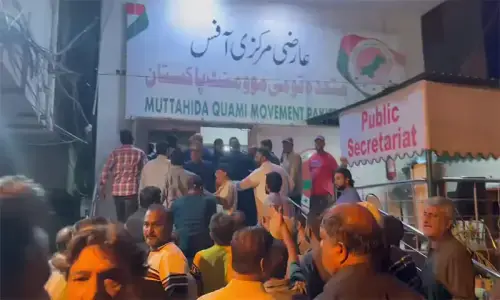
Former Bangladeshi students are turning to social media to detail allegations of "rampant" sex abuse at the hands of teachers and older pupils in madressahs, breaking their silence on a taboo topic in the conservative country.
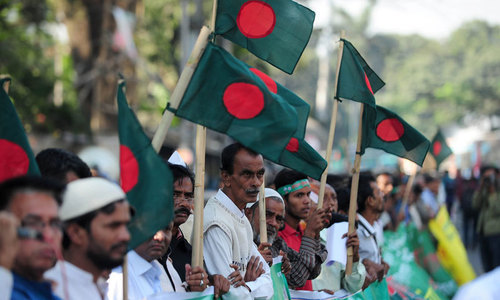
Child abuse in madressahs has long gone unreported in Bangladesh, a Muslim-majority nation where hardline groups draw their support from the tens of thousands of schools across the nation of 169 million people.
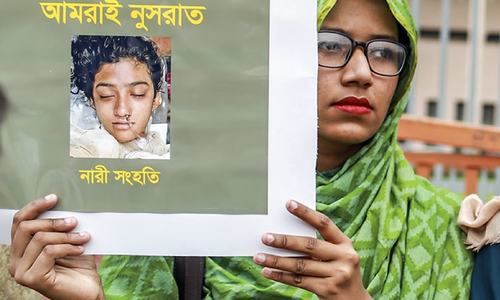
But in the wake of a brutal murder of a teenage girl who was burnt to death in April after accusing her headteacher of sexual assault, such incidents have been subject to national scrutiny and debate for the first time.
Read: Bangladesh girl burned to death on teacher's order: police
In July alone, at least five madressah teachers were arrested on rape charges against boys and girls under their care.
Several senior students were also held by police over the rape and beheading of an 11-year-old orphan, while a Dhaka cleric and seminary teacher was charged with sexually assaulting a dozen boys aged between 12 and 19.
The accusations reveal how students from poorer and rural backgrounds, whose parents send them to madressahs as they are more affordable than secular schools, are disproportionately affected by the abuse.
Rights activists said the assaults — which range from violent rapes to forcible kissing — are so pervasive that the cases reported in the media are just the tip of the iceberg.
"For years these crimes eluded spotlight due to sensitivity of the subject," Abdus Shahid, the head of child rights' group Bangladesh Shishu Odhikar Forum, told AFP.
"Devout Muslims send children to madressahs, but they don't speak up about these crimes as they feel it would harm these key religious institutions."
'Widespread and rampant'
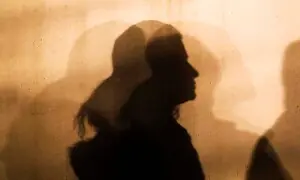
Hojaifa al Mamduh, who studied in three madressahs in the capital Dhaka, published a series of posts on Facebook in July detailing the abuses endured by students including himself.
The assaults were "so widespread in the madressahs, every student who has studied there knows about it," Al Mamduh, now a journalism student at a Dhaka University, told AFP.
"Many madressah teachers I know consider sex with children a lesser crime than consensual extramarital sex with women. Since they live in the same dormitories, the perpetrators can easily hide their crimes and put pressure on their poor students to keep mum."
The 23-year-old's posts generated heated debate in the country, and he was personally threatened.
He was accused of being "an agent of Jews and Christians" and smearing the "sacred image" of a madressah by one social media user.
Another reminded him of the fate of Avijit Roy, a top Bangladeshi atheist blogger and writer who was hacked to death by extremists in 2015.
But his posts encouraged others to share their own experiences of alleged sex crimes.
Mostakimbillah Masum, who published his story on a feminist website, said he was "first raped by an elder student in my madressah when I was just seven".
The 25-year-old told AFP that another one of his rapists was "a teacher who made me unconscious and raped me. It traumatised me permanently".
"Dozens of madressah students I know were either raped or witnessed rapes and sexual assaults of their fellow students," he added. "It is so rampant almost every madressah has a fair share of such stories."
Culture of impunity
Madressah teachers have strongly denied the allegations, calling them "negative propaganda".
Mahfuzul Haq, a principal of a madressah in Mohammadpur where Al Mamduh studied, told AFP "one or two isolated incidents can happen" as there were 20,000 madressah in the South Asian nation.
"Those who don't like to study in madressahs are spreading these stories," he added.
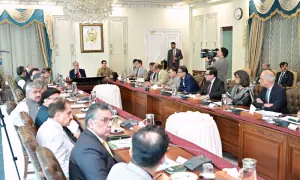
A spokesman for Hefazat-e-Islami, which represents a coalition of thousands of madressahs, said his organisation told a recent conference of 1,200 principals to take "tough stand against any sex crimes".
However, there has been growing acknowledgment of the alleged offences.
Pro-Islamic website Fateh24.com, viewed as a voice for the madressahs, pointed out in a report that children were at risk in smaller seminaries run by just one or two teachers and that had no oversight from governing bodies.
Editor Iftekhar Jamil, a former madressah student and teacher, added that the cases were "not isolated" incidents and called for closed-circuit cameras to be installed in students' sleeping quarters.
"Instead of looking for conspiracies, these madrasas must take up responsibility and adopt an action plan to tackle these crimes," he told AFP.