Plans detailed for first US mission to land on moon since Apollo


 0
0


SEATTLE: The first American spacecraft expected to land on the moon in nearly 50 years will be a robotic moon lander built by closely held Astrobotic Technology Inc and launched in two years by United Launch Alliance’s Vulcan rocket, the companies said on Monday.
Astrobotic was one of nine companies chosen in November to compete for $2.6 billion to develop small space vehicles and other technology for 20 missions to explore the lunar surface over the next decade.
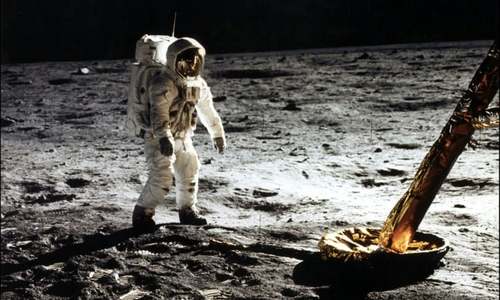
Pittsburgh-based Astrobotic picked Vulcan, being developed by a joint venture of Boeing Co and Lockheed Martin Corp , to launch its Peregrine lander from Florida’s Cape Canaveral in summer 2021. Barring schedule slips, Astrobotic said Peregrine would be the first American spacecraft to touch down on the moon since Apollo astronauts touched down in 1972.
The mission will ferry technology and experiments to the moon under a Nasa programme that will lay the groundwork for astronaut trips by 2024 under the optimistic schedule laid out by the Trump administration. “Our first flight on Vulcan is also the first big step in going back to the moon,” United Launch Alliance Chief Executive Tory Bruno said ahead of the announcement.
Astrobotic said in May that Nasa awarded it $79.5 million for the first mission, which will carry up to 28 payloads from eight different countries, including the United States and Mexico.
While the dollar value of the launch contract was not disclosed, it marks a high-profile victory for ULA’s flagship heavy-lift rocket, which Astrobotic said it chose over a rival bid by billionaire Elon Musk’s SpaceX.
Nasa is pushing to outsource the design, development and operations for some space activities to private companies under a strategy championed by Trump-appointed administrator Jim Bridenstine. He wants Nasa to be one customer of many in the low-Earth and lunar marketplaces to pave the way for deeper space exploration.
For ULA, the launch serves as the first of two certification flights for the US Air Force, a key test for a rocket that will replace ULA’s legacy Delta and Atlas rocket families, synonymous with space missions for the US military for decades.
Published in Dawn, August 20th, 2019