PAKISTAN’S Independence Day was a particularly appropriate occasion to express solidarity with the people of India-held Kashmir who have been so cruelly deprived of their freedom in a manner that exceeds even decades of seeing their homeland become a police state.
Anger continues to roil Pakistan over India’s revocation of the territory’s special status. It was reflected in Prime Minister Imran Khan’s speech yesterday to the Azad Jammu & Kashmir Legislative Assembly in which he warned India to desist from any military adventure against Pakistan.
“This is my message to you: you take action and every brick will be countered with a stone” — meaning, any action will meet with a stronger response. He described Prime Minister Narendra Modi’s unilateral decision as a “strategic blunder” that had ended up internationalising the Kashmir issue. And in remarks that echoed those he had made a day before, he compared the situation in IHK with the rise of Nazi Germany whose extremist ideology was the inspiration behind the Hindutva creed. The world, he said, must be made aware of the dangers inherent in Hindu extremism.
The question is: is the world prepared to listen? No doubt Pakistan’s stance on Kashmir is just, principled and anchored in international law.
Unfortunately however, realpolitik speaks a different language, where the lure of the market far outweighs other considerations, including historical and fraternal ties.
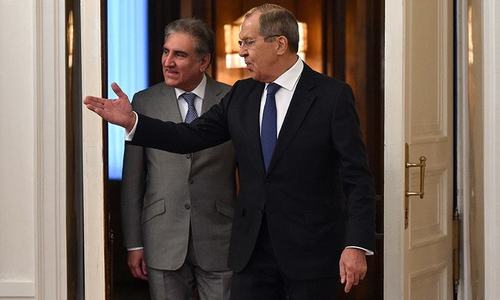
Foreign Minister Shah Mehmood Qureshi, in an unusually forthright press conference in Muzaffarabad on Tuesday, pointed out as much when he said: “Though we happen to talk about the ummah and Islam, the guardians of ummah have made investments and have interests in India which is a market of a billion people.”
Mr Qureshi also appeared to have little hope of a proactive response from the international community regarding IHK, contending that any of the UN Security Council’s permanent members could create hurdles for Pakistan when it presents its case before the global body. The world, he correctly observed, had shown little inclination to address Kashmir’s travails through the years and was unlikely to do so now. Mr Qureshi’s words clearly spring from a sense of disillusionment over the largely apathetic response across the globe — but especially from powerful Muslim countries — to India’s illegal actions.
However, notwithstanding India’s economic clout, there is another equally pragmatic — though far more urgent — aspect of the situation that the international community ignores at its peril. The indigenous Kashmiri movement for self-determination has grown more desperate in the face of increasing brutality by the state. Radical elements take root in precisely such a climate of despair, the result of a thousand indignities piled upon each other, with repercussions for the region and beyond. Transnational extremist forces may have to some extent been weakened, but they retain a shadowy presence, waiting for an opportunity to establish their relevance again. The world must act now to allay the injustice against the Kashmiri people.
Published in Dawn, August 15th, 2019