500 arrested in occupied Kashmir, clampdown challenged in Indian Supreme Court



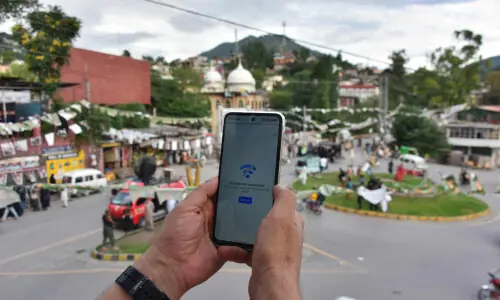
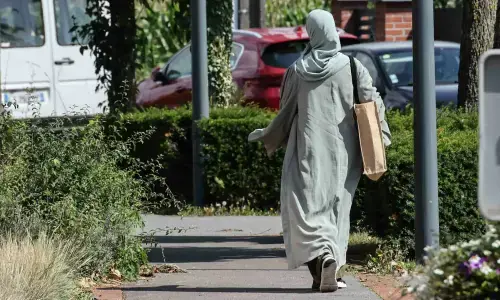
Indian security forces have arrested more than 500 people since New Delhi imposed a communications blackout and security clampdown in occupied Kashmir, where people remained holed up in their homes for a fourth day on Thursday.
The rigorous security measures followed India's decision this week to revoke the special status of occupied Jammu and Kashmir and downgrade the Himalayan region from statehood to a territory. Kashmiri fighters have been fighting against Indian rule in the occupied region for decades.
Indian Prime Minister Narendra Modi is expected to address the nation on Thursday to discuss the issue. His national security adviser, Ajit Doval, visited the region on Wednesday to assess the law and order situation.
A petition was filed in India's top court challenging the lockdown. Opposition Congress party activist Tehseen Poonawalla said he expected the Supreme Court to hear his petition on Thursday seeking immediate lifting of curfew and other restrictions, including blocking of phone lines, internet and news channels in Kashmir.
He also sought the immediate release of Kashmiri leaders who have been detained, including Omar Abdullah and Mehbooba Mufti.
Meanwhile, Congress leader Ghulam Nabi Azad, who had vehemently opposed the ruling Bharatiya Janata Party's decision to revoke occupied Kashmir's special status, was reportedly detained at the Srinagar airport today and was asked to return to New Delhi, India Today reported.
State-run All India Radio, which reported on the arrests without details, also said that cross-border firing by Indian and Pakistani troops hit the Rajouri sector of occupied Kashmir late on Wednesday.
Activist Ali Mohammed told the New Delhi Television news channel that he has been organising ambulances to carry sick poor people to hospitals in Srinagar, the main city in Indian-occupied Kashmir, as local residents can't even use phones to ask for medical help.
“It's hell,” a patient told the television channel.
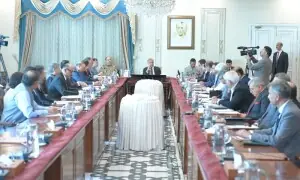
In response to India's action, Pakistan on Wednesday said it would downgrade its diplomatic ties with New Delhi, ask the Indian ambassador to leave and suspend trade. Prime Minister Imran Khan told Pakistan's National Security Committee that his government will use all diplomatic channels “to expose the brutal Indian racist regime” and human rights violations in Kashmir, the government's statement said.
India regretted Pakistan's steps and said in a statement that "the intention behind these measures is obviously to present an alarming picture to the world of our bilateral ties". It urged Pakistan to review its decision to downgrade ties so that normal channels for diplomatic communications are preserved.