PM’s US visit to promote stability in region: Qureshi

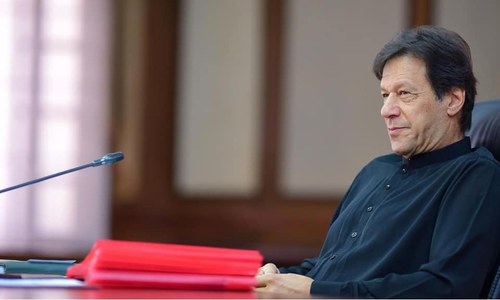
ISLAMABAD: Pakistan expects that Prime Minister Imran Khan’s upcoming visit to the United States would help promote peace, stability and prosperity in the region.
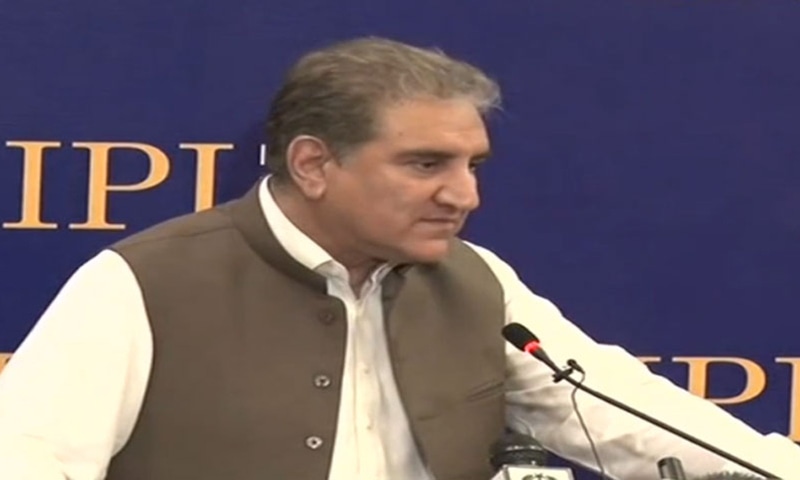
Foreign Minister Shah Mehmood Qureshi, while addressing a seminar organised by the Islamabad Policy Institute (IPI) on ‘Pakistan-US Relations: The Way Forward’, listed Pakistani leadership’s expectations from PM Khan’s maiden trip to the US next week during which he will meet President Donald Trump.
This was the first occasion that the foreign minister dwelt at length about the prime minister’s agenda for Washington’s trip since it was officially announced last week.
“First and foremost, we believe that moving forward with a constructive and positive approach is in the best interest of both Pakistan and the US. It would, therefore, be appropriate to work for broader engagement from Afghanistan to bilateral economic and trade cooperation to peace and stability in South Asia,” Mr Qureshi told participants of the seminar.
Pakistan to reaffirm its commitment to supporting political settlement of Afghan conflict
In the context of peace and stability, Mr Qureshi said that Pakistan would be reaffirming its commitment to supporting the political settlement of the Afghan conflict. Additionally, PM Khan would seek to convince the US leadership to support resumption of a sustained Pak-India dialogue and resolution of disputes including that of Kashmir.
“We are confident that this visit will help in ushering in an era of stability and prosperity in South Asia and the broader region. In this common objective, both Pakistan and United States will be joint beneficiaries,” said the foreign minister.
Mr Khan in his talks with President Trump would explore the possibility of expansion in trade and economic ties. Mr Qureshi said this was aimed at achieving “long-term economic growth, stability and human development in consonance with the vision of Naya Pakistan”.
The foreign minister observed that when the PTI government took office last August, Pakistan faced US coercion. “We have tried with some success to change that coercion into cooperation and move things from attempts at isolating Pakistan to invitation,” he maintained.
Former foreign secretary Ambassador Aizaz Chaudhry, on this occasion, stated that US perspective towards Pakistan was shaped by Afghanistan lens and increasingly from the Chinese lens. Therefore, it needs to be clarified to the US leadership that Islamabad’s relations with Beijing were not against any other country.
Former defence secretary retired Lt Gen Asif Yasin Malik recommended that military-to-military relations, which have so far formed the bedrock of the ties, should no more be the main driver of the relationship with the US, otherwise Pakistan would remain “vulnerable to blackmail”.
CEO of JS Global Capital Kamran Nasir said: “Investment is a prerequisite of trade and Pakistan is rapidly becoming nothing less than the ideal place for it. The US can play a critical role in enhancing economic ties by way of investment in key sectors such as energy, logistics, agriculture, tourism and technology.” He asked the government to involve the corporate sector in resetting the bilateral ties and narrative about Pakistan.
Ambassador Mohammad Sadiq cautioned about the prospects of peace in Afghanistan. He said that the conflict in Afghanistan had created a new elite class that has no interest in peace there. He feared that even if all parties agree to peace, the implementation of peace deal will remain a big challenge, particularly if one ethnic group dominated the new dispensation.
Executive Director of IPI Prof Sajjad Bokhari said that for a meaningful change in the complexion of bilateral ties, the US needed to review its Indo-Pacific strategy, address Pakistan’s security concerns, and stop seeing China-Pakistan relations, particularly the CPEC, as a challenge.
He underscored that both sides must recommit to the principles of mutual respect and finding common ground on issues of mutual interest.
In his concluding remarks, Syed Mohammad Ali said that Pakistan must satisfy the US leadership that its relationship with China was not against it. In contrast, Washington’s Indo-Pacific policy is both unrealistic and dangerous for South Asian strategic stability and peace. The US policy towards South Asia, therefore, deserved a timely review, he said.
Published in Dawn, July 17th, 2019