TIMERGARA: Chief of the banned Tehreek Nifaz Shariat-i-Muhammadi (TNSM) Maulana Sufi Muhammad, who spearheaded a violent movement for enforcement of Shariah in Malakand division in the 90s and later led thousands of youths into battle against US forces in Afghanistan, passed away on Thursday morning in Peshawar. He was 86.
His body was shifted to Lal Qila, Maidan, and was buried in his ancestral graveyard.
An official in Peshawar told Dawn the Maulana was taken to the Police Hospital early in the morning where doctors pronounced him dead. He was suffering from multiple ailments including diabetes and hypertension.
He spearheaded a violent movement for enforcement of Shariah in Malakand division and spent dozens of years behind bars
A former member of the Jamaat-i-Islami, Maulana Sufi Muhammad founded the TNSM in 1988, along with some elders of Maidan in Lower Dir district, and the group’s aim was to enforce Shariah in Malakand division, Hazara and Kohistan.
The Maulana launched a civil disobedience movement in 1994 which was forcibly suppressed by the then government of the Pakistan Peoples Party.
He was briefly detained and made to stop his followers from continuing with the movement. But by that time the TNSM activists had attacked government installations and offices in Swat and seized even the airport.
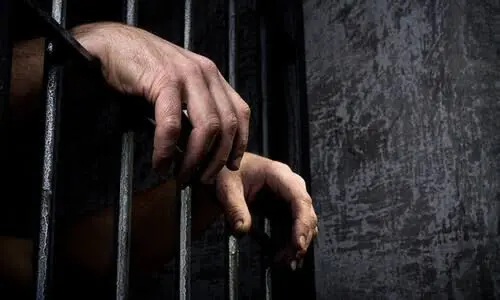
He remained in prison for nearly 15 years after the formation of the TNSM, which attracted attention from time to time, whenever the group called for enforcement of Shariah in any part of the country.
The Maulana gained prominence once again in 2001, when he motivated thousands of youths to cross the Pak-Afghan border to fight the US-led forces in Afghanistan. He ultimately took about 10,000 poorly armed volunteers and followers to Afghanistan to take on the foreign forces who had invaded the country in the wake of 9/11 attacks.
However, the Afghan Taliban suffered a heavy defeat and the Maulana, after losing hundreds of his followers, returned to Pakistan. He was arrested in 2002, while crossing over into Pakistan at Parachinar.
Hundreds of his supporters were killed in northern Afghanistan when the US forces bombed Taliban positions. Many of the volunteers from Malakand and tribal regions were captured during combat operations in the neighbouring country but nobody was made accountable for misleading the youth.
The Maulana — subsequently convicted under the Frontier Crimes Regulation — was released from jail in 2008 after talks with the Khyber Pakhtunkhwa government aimed to persuade the Pakistani Taliban to remain calm and peaceful in parts of the Malakand division.
He was also the father-in-law of former chief of the Tehreek-i-Taliban Pakistan (TTP), Mullah Fazlullah of Swat, who was later killed in a US drone attack in Afghanistan.
Maulana Sufi Muhammad was born in Maidan area of Lower Dir in 1933. After completion of religious education at Panj Pir, Swabi, he joined the Jamaat-i-Islami.
He had 13 sons and six daughters from two wives. One of his sons, Maulana Kifayatullah, was killed when the Pakistan Army shelled a village in Upper Maidan during a military offensive on May 7, 2009.
The Maulana was again arrested by the security forces in July 2009 in Peshawar after the final phase of the military operation in Malakand division against the TTP militants.
He was imprisoned in the Central Prison, Peshawar, and had to face trial in over a dozen cases of terrorism, including for delivering a controversial speech in Mingora in which he had termed democracy “un-Islamic” and criticised the judiciary.
He was later acquitted in most of the cases and was released in January 2018 on bail in two outstanding cases by the Peshawar High Court on medical grounds. He spent the last days of his life at an undisclosed location in Peshawar.
Published in Dawn, July 12th, 2019