0
0

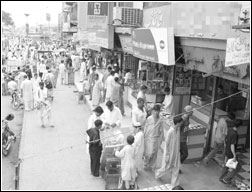 CONSUMERISM is manifested in the purchasing of goods and services, with little care for their true need, durability, product origin or the environmental consequences.
Consumerism is driven by aggressive advertising designed to create both, a desire to follow the latest trends, and the personal self-reward system based on acquisition.
The more consumerism spreads, the weaker is the incentive to manufacture long-lasting, quality products, and the greater the likelihood that cheap products will instead be imported from the lowest-wage, environmentally unregulated overseas manufacturer that mobile capital, ever seeking the highest return, can find.
By facilitating the sale of whatever is advertised and sold, without examination by the purchaser of quality, origin, environmental degradation or traditions of manufacture, consumerism fuels the destruction of the productive economy.
While consumerism offers the tangible goal of owning a product, it lacks the fulfilment of other cultural values. Consumerism offers only short term ego-gratification for those who can afford the luxury and frustration for those who cannot. It exists as an incomplete and inadequately engineered system of values substituted for a waning cultural heritage.
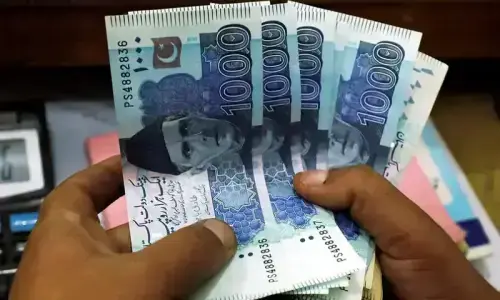
Consumerism is on the rise resulting in multifarious problems and negative outcomes. The situation persists since a decade but the pace of its proliferation has multiplied enormously during last three or four years. The hyper-consumerism is being promoted by cheap credit for consumer products and trends towards borrowing. Bank credit is available from commercial banks for purchase of TVs, refrigerators, automobiles etc. The lifestyle of the citizens is changing and personal savings are being replaced by borrowing.
Thus, the culture of saving for future is vanishing with serious consequences for economic growth and development. Although this spending has some benefits through circulation of money in the economy, boosts business activities and results in a general upward trend in business cycle, the disadvantages and unfavourable trickle down effects have outstripped these benefits.
Before discussing the pros and cons of this phenomenon, it is imperative to have an insight of escalating consumerism. Banks have entered a non-stop race of selling consumer products to all and sundry without investigating fully and analyzing their net worth and repayment capacity.
Excess liquidity and low mark-up rates have fuelled consumer lending. The average rates for car financing in 2004 was around eight per cent, resulting in undue and artificial demand for vehicles. The automobile industry suffered a supply shock and undue delay in delivery tenor. This situation was exploited by automobile manufacturers, already enjoying oligopoly status by tying up purchasers funds for as long as seven months. Similar trends are seen in other consumer products.
Pakistan is not among front line consumer economies in the world. In the US, the share of consumer is 30 per cent in total loans as compared to less than 10 per cent in this country. But a major area of concern is the stage of development of economy and the pace with which consumer loans are mounting.
In the current stage of development, most economies produced more and consumed less increasing the rate of savings and investments. The SME sector provided underpinnings to rapidly growing economy and role of banks in providing funds both for working capital and project loans provided further impetus.
The situation in our case is altogether different. Here, commercial banks are more interested in extending consumer loans instead of discovering new and profitable avenues for investment and capacity building. We need a paradigm shift in our loaning policy. The pressing need is to promote investment banking opportunities and to discourage consumer loans. Here the role of central bank is pertinent and decisive. SBP needs to formulate different policies for business and consumer financing. Consumer financing should must not be a preferred sector. There are myriad of undesirable ramifications of this hyper-consumerism. When a person gets amenities of life without facing hardships of life, the real and intrinsic value of such a facility totally disappears.
It demoralizes many people in society with no such avenues to fulfil their aspirations. This promotes a psychological conflict between haves and have-nots. Then there is huge influx of traffic on crowded roads. The saving culture must be revived for a sustainable growth of development that provides ample jobs for the unemployed, contains inflation and promotes a culture of investment and entrepreneurship.