US-China trade talks 'back on track': White House adviser


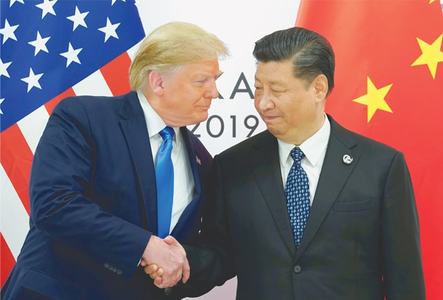
US-China trade negotiations are now headed in a positive direction following this weekend's meeting between President Donald Trump and his Chinese counterpart Xi Jinping, a top White House aide said on Tuesday.
But trade advisor Peter Navarro said Chinese telecoms giant Huawei remains blocked from participating in the development of 5G wireless networks in the United States even though Washington has softened its stance toward the company.
“We're reengaged. We're talking on the phone already. There will probably be visits. It's all good,” Navarro told CNBC.
“From an investor's point of view, here is all you have to know: Talks are back on track with the work that has been done to date.”
The US trade delegation has been led by Trade Representative Robert Lighthizer and Treasury Secretary Steven Mnuchin.
After talks nearly collapsed in May, Trump and Xi on Saturday agreed at a meeting in Japan to resume negotiations toward ending their year-long trade war.
Trump accused the Chinese side of reneging on commitments made during the talks and jacked up duty rates on a $200 billion tranche of Chinese imports.
Markets were encouraged by Saturday's developments, which averted further deterioration in a trade conflict already weighing on the global economy.
Stocks were struggling on Tuesday, in part because Washington threatened heavier tariffs on European goods in a dispute over subsidies to aircraft maker Airbus.
And the tariffs put in place since last year by both Washington and Beijing — which currently cover more than $360 billion in two-way trade — remain in place.
Navarro said a 150-page document developed during the US-China trade talks since December remained the basis of discussion.
He also said all that was at issue in Saturday's agreement on Huawei was “a small amount of chips” with negligible implications for spy craft.
“President Xi requested some relief on Huawei,” he said. “Here is the important thing: US policy on Huawei with respect to 5G in this country has not changed.”
“All we've done, basically, is to allow the sale of chips to Huawei. These are lower tech items which do not impact national security whatsoever,” he added.
Trump triggered a backlash on Capitol Hill over the weekend by agreeing to soften some US export restrictions on crucial components to Huawei.
US officials say Beijing exploits Huawei for espionage. However Trump stipulated that officials would take care to avoid creating new risks to national security.