Swiss women hold strike for equality
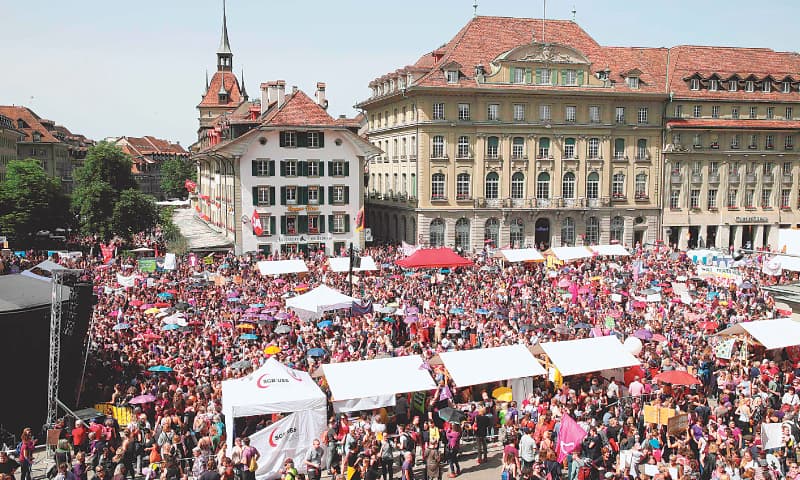

GENEVA: Hundreds of thousands of women across Switzerland held a strike on Friday to highlight their wealthy nation’s poor record on female rights, recreating the passion of the last such walkout 28 years ago.
In Zurich, the financial capital and the country’s biggest city, tens of thousands of protesters clogged the streets, blowing whistles and banging pots and pans. “Men, go do the ironing,” one sign read.
“It’s not just about wages. The equal opportunity is not there. At least for the next generation it needs to be there,” Zurich city councilwoman Karin Rykart said as hundreds of municipal workers and police officers demonstrated.
Despite its high quality of life, Switzerland lags other developed economies in female pay and workplace gender equality.
Friday’s events echoed a strike in 1991, five years before the Gender Equality Act came into force. That banned workplace discrimination and sexual harassment and protected women from bias or dismissal over pregnancy, marital status, or gender.
But more than 20 years later, women still earn less than men, face routine questioning of their competence, and encounter condescension on the job, they say.
Organisers say the strike draws attention to wages, violence against women, and the need for greater representation in positions of power and more equitable family policy.
Christine Lagarde, the first woman to lead the International Monetary Fund, joined in while addressing an event in Geneva.
“...I am actually wearing this [lapel pin] out of solidarity with the Swiss women who claim equality in terms of salaries and a few other things,” she said.
The SGB labour union federation estimated 100,000 people joined the strike by midday, with more participating from 3:24pm, when women technically work for free, given wage discrimination.
Swiss women earn roughly 20 per cent less than men. While that is an improvement from about a third less in 1991, the discrimination gap meaning differences that cannot be explained by rank or role has actually worsened since 2000, government data show.
On June 14, 1991, women blocked trams during a sit-in in the heart of Zurich’s financial district and gathered outside schools, hospitals and across cities with purple balloons and banners to demand equal pay for equal work.
That came a decade after basic gender equality was enshrined in the Swiss constitution and less than three months after women for the first time were allowed to participate in a regional vote in the canton of Appenzell Innerrhoden.
Published in Dawn, June 15th, 2019