Iraq warns of ‘danger of war’ as Iran’s FM visits Baghdad


BAGHDAD: Iraqi leaders have warned of the risks of war during a visit by Iranian Foreign Minister Mohammad Javad Zarif, whose country is locked in a tense standoff with the United States.
Zarif’s visit to neighbouring Iraq — which is caught in the middle of its two allies, the US and Iran — follows a decision by Washington to deploy 1,500 additional troops to the Middle East.
“We are currently repelling all the efforts of war against Iran, whether economic or military,” Zarif said at a joint news conference with his Iraqi counterpart Mohammed Ali al-Hakim. “We will face them with strength and we will resist,” he added.
For his part, Hakim said: “We stand by our neighbour Iran, and economic sanctions are unnecessary and cause great suffering to the Iranian people.” Iraqi Prime Minister Adel Abdel Mahdi warned of the “danger of a war” during a meeting with Zarif on Saturday night, his office said.
Abdel Mahdi pleaded for the “stability of the region and the upholding of the nuclear deal,” it said, referring to a 2015 agreement between Tehran and major powers.
Iraqi President Barham Saleh discussed with Zarif “the need to prevent all war or escalation,” his office said.
On Saturday, Zarif called the deployment of extra US troops to the region “very dangerous and a threat to international peace and security.” It follows a US decision in early May to send an aircraft carrier strike force and B-52 bombers in a show of force against what Washington’s leaders believed was an imminent Iranian plan to attack US assets.
Washington says the latest reinforcements are in response to a “campaign” of recent attacks including a rocket launched into the Green Zone in Baghdad, explosive devices that damaged four tankers near the entrance to the Gulf, and drone strikes by Yemeni rebels on a key Saudi oil pipeline. Iran has denied any involvement.
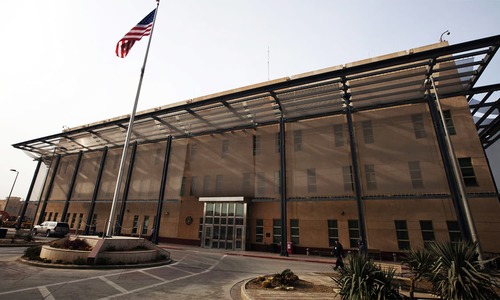
On May 15, the United States ordered the evacuation of non-emergency staff from its Baghdad embassy and Arbil consulate, citing an “imminent” threat from Iranian-linked armed groups in Iraq, two of which rejected the claim.
During the three-year battle to oust the militant Islamic State group from Iraqi cities, Iran-backed militias on the ground effectively fought on the same side as US-led coalition warplanes in the skies.
But since Iraq declared victory over the jihadists in December 2017, relations between Washington and Tehran have deteriorated sharply.
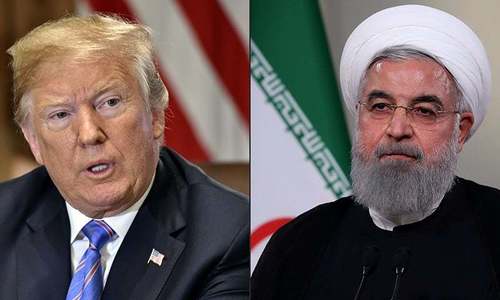
In May last year, US President Donald Trump pulled out of the landmark nuclear deal with Iran and later re-instated tough sanctions. Zarif was due to meet representatives of Iraq’s different political forces as well as religious dignitaries in Karbala and Najaf in southern Iraq during his visit through Monday.
Published in Dawn, May 27th, 2019