Sweden to reopen rape case against WikiLeaks' Assange


 7
7


Swedish prosecutors said on Monday they are reopening a rape case against WikiLeaks founder Julian Assange, a month after he was removed from the Ecuadorian Embassy in London.
Eva-Marie Persson, Sweden's deputy director of public prosecutions, told a news conference in Stockholm that "there is still a probable cause to suspect that Assange committed a rape."
She added: “It is my assessment that a new questioning of Assange is required.”
Swedish prosecutors filed preliminary charges a step short of formal charges against Assange after he visited the country in 2010.
A case of alleged sexual misconduct was dropped in 2017 when the statute of limitations expired. That left a rape allegation, but officials couldn't pursue it because Assange was living at the embassy and there was no prospect of bringing him to Sweden.
The statute of limitations on that case expires in August 2020.
The case was opened following complaints from two Swedish women who said they were the victims of sex crimes committed by Assange. He has denied the allegations, asserting that they were politically motivated and that the sex was consensual.
The 47-year-old Australian met the women in connection with a lecture in August 2010 in Stockholm. One was involved in organising an event for Sweden's centre-left Social Democratic Party and offered to host Assange at her apartment. The other was in the audience.
A police officer who heard the women's accounts decided there was reason to suspect they were victims of sex crimes and handed the case to a prosecutor.
Neither of the alleged victims has been named publicly.
Assange left Sweden for Britain in September 2010. In November that year, a Stockholm court approved a request to detain Assange for questioning.
The Australian secret-spiller took refuge at the Ecuadorian Embassy in June 2012 to avoid extradition to Sweden.
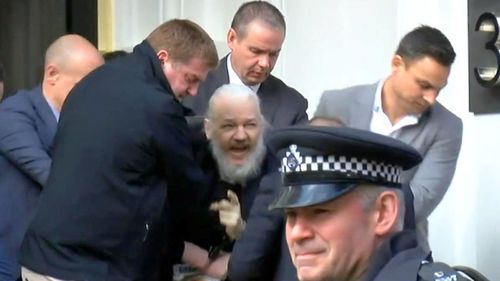
He was arrested by British police April 11 after Ecuador revoked his political asylum, accusing him of everything from meddling in the nation's foreign affairs to poor hygiene.
Currently, Assange is in London's Belmarsh Prison serving a 50-week sentence for jumping bail in 2012. He is also being held on a United States extradition warrant for allegedly hacking into a Pentagon computer.